
Soups & Stews
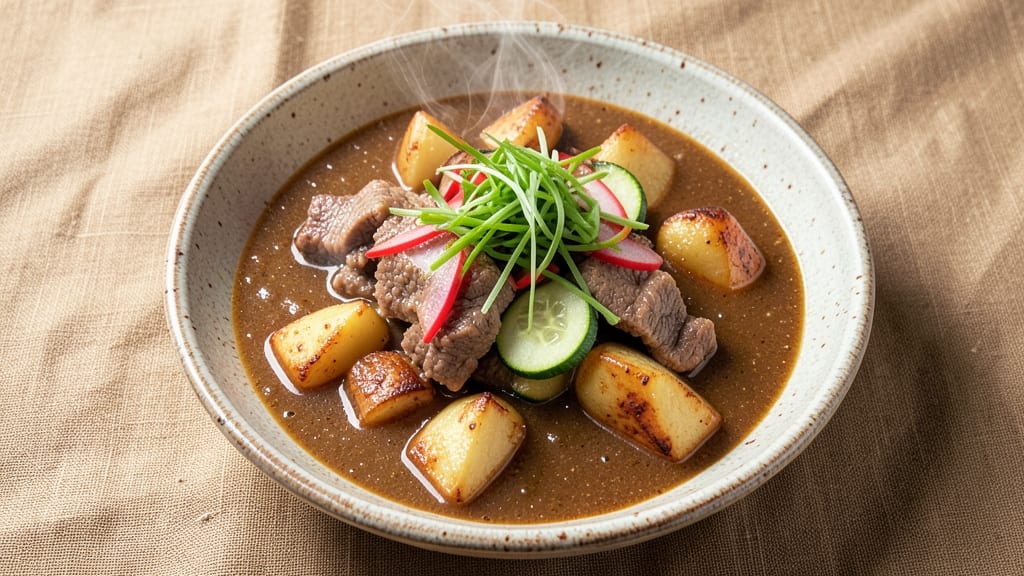
This Korean bean paste stew delivers deep umami richness that transforms simple ingredients into a hearty, comforting meal. The smoky fermented notes of kongnamul (mung bean paste) create an irresistible aroma that fills your kitchen—and your home—with warmth.
What makes this dish special is its balance: tender protein, silky legumes, and vegetables all simmered until perfectly tender in a sauce that's both savory and subtly sweet.
The beauty of this stew lies in its versatility—it works with pork, beef, or tofu, and you can customize the vegetables based on what's seasonal.
Traditional versions often include potatoes, zucchini, and greens, but I've included a foolproof method that ensures the sauce remains thick and flavorful without requiring constant stirring. The key is patience; letting the stew develop over 45 minutes on low heat allows the flavors to meld into something truly extraordinary.
By the time you're ready to serve, you'll have a steaming bowl of stew with tender meat or tofu, soft vegetables, and a sauce that clings to every bite.
The aroma alone will have everyone gathering at the table, and the first spoonful delivers that perfect combination of smoky, fermented depth and comforting silkiness. This is the kind of dish that pairs beautifully with steamed rice and simple banchan (side dishes), making it ideal for family meals or gatherings.
Whether you're cooking for a crowd or just treating yourself to a comforting meal, this Korean bean paste stew delivers restaurant-quality results with minimal effort. The ingredients are simple, but the technique ensures maximum flavor extraction. Let's get started on creating this flavorful centerpiece for your table.
Ingredients for bean paste stew korean
Simple ingredients that pack smoky, fermented depth and comforting silkiness into every bite.
| Ingredient | Amount | Notes |
|---|---|---|
| Kongnamul (Mung Bean Paste) 🌱 | ½ cup | Fermented, smoky variety preferred |
| Lean Ground Pork 🐖 | 1 lb | 80/20 fat ratio for juiciness |
| Korean Radish (Mu) 🥕 | 1 whole | Substitute daikon if unavailable |
| Potatoes 🥔 | 2 medium | Yukon gold preferred, peeled |
| Zucchini 🥒 | 1 medium | Sliced into half-moons |
| Green Onions 🧅 | 4 whole | White and green parts separated |
| Fresh Spinach 🍃 | 2 cups | Baby spinach works well |
| Garlic Cloves 🧄 | 4 cloves | Minced for even distribution |
| Ginger Root 🌿 | 1 tbsp | Freshly grated, aromatic |
| Soy Sauce 🥢 | ¼ cup | Korean or Japanese preferred |
| Sesame Oil 🌰 | 1 tbsp | Toasted for nutty aroma |
| Rice Vinegar 🍶 | 1 tbsp | For subtle acidity balance |
| White Rice 🍚 | 2 cups | Uncooked, short-grain preferred |
| Vegetable Oil 🫒 | 2 tbsp | For initial searing |
| Salt 🧂 | 1 tsp | Kosher or sea salt |
The kongnamul (mung bean paste) is the heart of this dish—look for the fermented, smoky variety at Korean markets or specialty stores. Maesil Kongnamul from H Mart or Korean Food Store delivers that authentic depth. If you can't find it, miso paste or red miso works in a pinch, though the flavor will be milder. The pork should be lean but not too dry—80/20 fat ratio ensures juiciness without greasiness. For extra authenticity, ask your butcher to grind it fresh if possible. The Korean radish (mu) adds a subtle sweetness that balances the stew's richness, but daikon radish is a perfect substitute if you're in a hurry.
No kongnamul? Double the soy sauce and add 1 tbsp of gochujang for heat. The green onions are non-negotiable—the white parts add depth while the greens provide freshness at the end. Fresh ginger is ideal, but powdered works at half the amount. The zucchini and potatoes can be swapped for any seasonal vegetables (carrots, sweet potatoes, or even mushrooms). For a vegetarian version, replace the pork with extra-firm tofu pressed and cubed—it absorbs the flavors beautifully. The rice vinegar might seem like an odd addition, but it brightens the stew without overpowering the umami. Apple cider vinegar works too, just reduce to 1 tsp.
This stew tastes even better the next day—make a double batch and freeze half for lazy weeknights. Store in an airtight container for 4-5 days in the fridge, or freeze for up to 3 months. The sauce thickens as it cools, so add a splash of water when reheating. Serve with steamed rice and quick-pickled vegetables for a complete meal. The aroma alone will have everyone at the table—trust me, it's worth the wait.
Why You'll Love This Recipe
- One-Pan Magic: I swear by this—just brown the pork, toss in everything else, and let it simmer. No chopping boards, no extra pots, just one skillet doing all the work while you sip your coffee.
- Umami Bomb: That kongnamul paste? It’s the star—deep, nutty, and slightly sweet with a fermented kick. The pork soaks it up, and the radish adds this perfect chewy bite that makes it impossible to stop eating.
- Leftovers That Don’t Suck: Between us, most stews get boring after day two. Not this one. The flavors actually deepened in my fridge—better the next day, honestly. I freeze half for lazy Mondays when I can’t be bothered.
- Budget Meal for a Crowd: A pound of pork, a bag of potatoes, and a jar of kongnamul stretch to feed four (or two very hungry people). Here’s what sold me—it’s the kind of dish where you double the recipe without thinking, and still have leftovers.
Step-by-step instructions for Korean bean paste stew
This hearty stew delivers deep umami richness and comforting texture—just follow the method.
Prepare the Base with Kongnamul and Pork
Heat the 2 tablespoons vegetable oil in a large, heavy-bottomed pot over medium-high heat. Add the 1 pound lean ground pork and cook, breaking it apart with a wooden spoon, until it loses its raw color and begins to brown—about 5-6 minutes. This step develops the meat's natural flavors and removes excess moisture.
Reduce heat to medium and add the 0.5 cup Kongnamul (Mung Bean Paste). Stir continuously for 2-3 minutes until the paste darkens and releases its aromatic oils. This is where the stew's signature smoky depth begins to form. If the paste sticks to the bottom, add 1-2 tablespoons water to help it incorporate smoothly. The mixture should coat the back of a spoon with a velvety texture.
Build Layers of Flavor with Aromatics and Vegetables
Add the 4 cloves minced garlic and 1 tablespoon grated ginger root to the pot, stirring for 30 seconds until fragrant. The garlic should sizzle slightly but not burn—this releases its sweet, pungent essence. Next, pour in the 0.25 cup soy sauce and 1 tablespoon rice vinegar, stirring to combine. Let the mixture simmer for 2 minutes to allow the vinegar to mellow and the soy sauce to deepen in flavor.
Add the 2 medium peeled potatoes (cut into 1-inch chunks) and the 1 medium zucchini (sliced into half-moons). Stir gently to coat the vegetables in the sauce. Pour in 1 cup water and bring to a gentle simmer. Cover the pot and cook for 12-15 minutes, until the potatoes are tender but not falling apart. You'll know they're ready when a knife slides in easily—they should hold their shape but still be fork-tender.
Incorporate the Radish and Season to Perfection
Peel and slice the 1 whole Korean radish (Mu) into ½-inch thick rounds and add them to the pot. Stir in the 1 tablespoon toasted sesame oil and 1 teaspoon salt, then simmer uncovered for 8-10 minutes until the radish softens slightly but still retains a slight bite. The radish should absorb the stew's rich flavors while adding a subtle crunch.
Taste the stew and adjust seasoning if needed. If it needs more depth, add a splash of water or a pinch more salt. The stew should balance smoky, savory, and slightly tangy notes. Here's the thing—don't rush this step. The flavors need time to meld, so let it simmer gently for another 5 minutes to ensure everything is harmonized.
Finish with Spinach and Green Onions
Add the 2 cups fresh spinach and stir until just wilted—about 1-2 minutes. The spinach should soften but still retain its vibrant green color. Remove the pot from heat and let it sit for 2 minutes to allow the flavors to settle.
Separate the 4 whole green onions into white and green parts. Stir the white parts into the stew for added flavor, then garnish each serving with the green parts. Serve the stew hot over 2 cups cooked white rice, ensuring each bite captures the stew's silky richness and smoky depth. The rice will soak up the flavorful broth, making every spoonful a perfect balance of texture and taste.
Pro Tips For Making Bean Paste Stew Korean
- Bloom the Kongnamul: Before adding any other ingredients, dissolve the mung bean paste in just 1/2 cup hot broth (not water) and let it sit for 3-4 minutes—this prevents clumping and makes the sauce silky. I used to rush this step and ended up with a grainy stew that looked like it had sand in it.
- Sear the Pork Hard: Cook the ground pork until it’s deep brown, not just pink—this builds flavor that cuts through the earthiness of the kongnamul. Use a nonstick skillet and break it up with a wooden spoon; if it sticks, you’re not hot enough.
- Cut Radish in Chunks: Skip the thin slices—1.5-inch cubes of Korean radish hold their shape better and absorb the sauce without turning to mush. My first attempt with matchsticks made the stew look like a vegetable soup.
- Potatoes First, Zucchini Last: Add potatoes 10 minutes before the zucchini so they soak up the sauce while the zucchini stays crisp. If you’re short on time, parboil the zucchini for 2 minutes first—it’ll still soften in the stew but won’t turn to sludge.
Regional styles of bean paste stew korean
Jeonju-Style Depth
Jeonju, Korea's cultural heart, is famous for its rich kongnamul stews that highlight the fermented bean paste's earthy notes. The city's version often includes pork belly or ribs instead of ground pork, creating a meatier texture.
I love adding 1 tbsp of fermented seafood (jeotgal) like shrimp or anchovies to the stew for an extra umami punch—it's a Jeonju secret that elevates the dish.
The key here is patience: simmer the stew for 10 minutes longer to let the pork render its fat into the sauce, creating a glossy, flavorful coating on every ingredient. 🥓
Busan Coastal Twist
Busan's coastal location brings a briny, oceanic influence to stews. For a Busan-style version, swap the pork for firm white fish like cod or pollock (cut into chunks) and add 1 tbsp of gochujang for subtle heat.
The city's version often includes seaweed (wakame) strips—about ½ cup rehydrated—which adds a delicate oceanic sweetness. Simmer the fish for just 8-10 minutes to avoid overcooking, and finish with 1 tsp of toasted sesame seeds for crunch.
The result is a lighter, more refreshing stew perfect for warmer days. 🌊
Seoul's Modern Fusion
Seoul's fast-paced food scene has given birth to modern twists on traditional stews. Try adding kimchi (½ cup, chopped) to the stew during the final 5 minutes of cooking to infuse it with tangy, spicy depth.
For a fusion approach, stir in 1 tbsp of miso paste along with the kongnamul to blend Japanese and Korean flavors. Some Seoul chefs even incorporate shitake mushrooms (4-5, sliced) for an earthy, meaty texture that pairs beautifully with the pork.
The city's version often finishes with a drizzle of chili oil for a smoky, spicy kick that's hard to resist. 🔥
Vegetarian Temple Style
Korean Buddhist temples have perfected vegetarian versions of kongnamul stews that are just as hearty. Replace the pork with extra-firm tofu (14 oz, pressed and cubed) and add 1 cup of enoki mushrooms for their delicate, crunchy texture.
Boost the umami with 2 tbsp of mushroom powder or 1 tbsp of soy sauce substitute. For extra richness, stir in 1 tbsp of sesame paste during the final 5 minutes of cooking. The temple version often includes bok choy (2 cups, chopped) for its mild, slightly bitter contrast.
Serve with steamed rice and a side of soy-marinated tofu for a complete, protein-packed meal. 🌱
Winter Comfort Version
Koreans traditionally eat kongnamul stews during winter for their warming properties. For a cozy winter version, add 1 cup of sweet potatoes (peeled and cubed) and ½ cup of corn kernels to the stew.
The sweetness of the potatoes and corn balances the stew's smoky depth, while their hearty texture makes it more filling. Simmer the stew for an extra 10 minutes to let the sweet potatoes caramelize slightly, adding natural sweetness.
Finish with a sprinkle of toasted sesame seeds and a drizzle of sesame oil for a nutty, aromatic finish that's perfect for chilly evenings. ❄️
Spicy Firehouse Style
Inspired by Korea's firehouse stews (mulgogi), this version cranks up the heat with 1 tbsp of gochugaru (Korean red pepper flakes) and 1 tbsp of gochujang. Add the gochugaru during the final 5 minutes of cooking to distribute the heat evenly, while the gochujang deepens the sauce's complexity.
For extra smokiness, stir in ½ tsp of smoked paprika with the kongnamul. This version is a crowd-pleaser, especially when served with steamed rice and a side of kimchi to balance the heat. The smoky, spicy flavors make this stew feel like a hug on a cold day. 🌶️
Nutrition facts
Frequently asked questions
What makes kongnamul different from other Korean pastes like doenjang?
Kongnamul is made from fermented mung beans, giving it a distinct smoky, earthy flavor with a slightly sweet undertone. Unlike doenjang (fermented soybean paste), which has a deeper, saltier profile, kongnamul offers a lighter texture and a unique aroma that pairs beautifully with vegetables and pork. It's often used in lighter stews where you want to highlight the natural sweetness of ingredients.
Can I substitute kongnamul with miso paste?
Yes, but the flavor will differ slightly. Use ½ cup red miso paste and add 1 tsp smoked paprika to mimic kongnamul's smoky depth. The miso will provide umami but lacks the fermented bean sweetness. For best results, let the stew simmer 5 minutes longer to develop the flavors.
Why does my stew taste too salty?
Kongnamul and soy sauce are both salty, so balance is key. If your stew tastes too salty, add ½ cup water or vegetable broth and simmer for 5 minutes to dilute. For extra depth, stir in 1 tbsp rice vinegar or a splash of sesame oil to brighten the flavors. Taste as you go—this stew should have a savory-sweet harmony, not just saltiness.
How do I make this vegetarian?
Replace the pork with 14 oz extra-firm tofu (pressed and cubed) and add 1 cup enoki mushrooms for texture. Boost umami with 2 tbsp mushroom powder or 1 tbsp soy sauce substitute. For richness, stir in 1 tbsp sesame paste during the final 5 minutes of cooking. The result is just as hearty and flavorful!
Can I make this stew ahead of time?
This stew tastes even better the next day. Store in an airtight container in the fridge for 4-5 days or freeze for up to 3 months. When reheating, add 1-2 tbsp water to prevent thickening. The flavors deepen overnight, making it perfect for meal prep.