
Sauces & Condiments
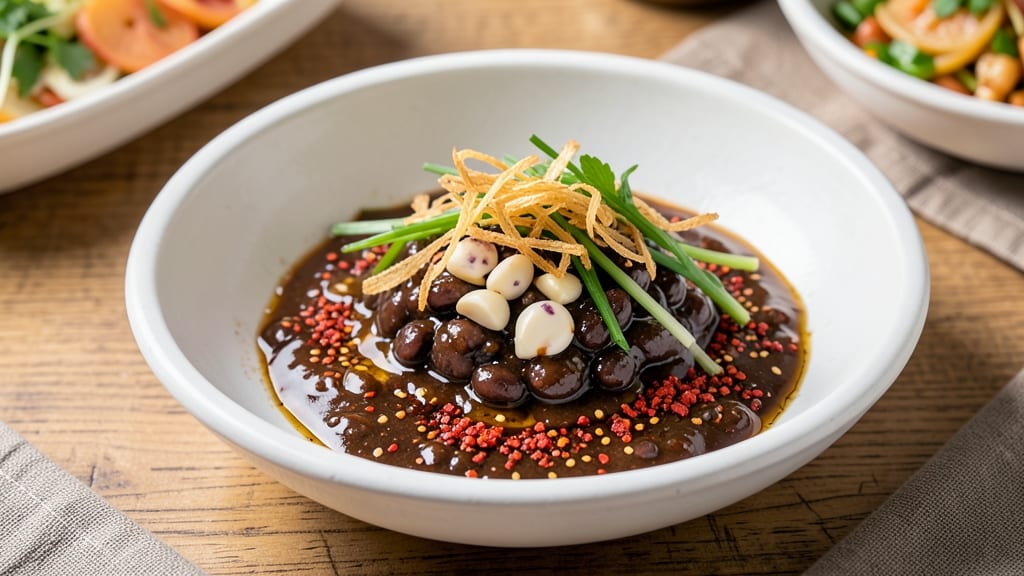
This fermented black bean Korean sauce transforms simple stir-fries into restaurant-worthy dishes with its deep umami richness and balanced heat. The secret lies in chunjang—fermented black beans that develop complex, savory depth when simmered with gochugaru (Korean chili flakes), garlic, and soy.
Unlike store-bought versions, this homemade sauce delivers authentic flavor with just 10 minutes of active prep and 20 minutes of simmering. What sets this sauce apart is its versatility: use it as a marinade for tofu or chicken, a dipping sauce for dumplings, or the star of vegan stir-fries.
The fermentation process (if using pre-fermented beans) adds layers of earthy complexity, while fresh garlic and sesame oil keep it bright. No fermentation? No problem—this recipe works with store-bought chunjang for equally impressive results.
The final product is a glossy, aromatic sauce with a perfect balance of sweet, salty, and spicy notes. It clings beautifully to noodles, vegetables, or proteins, elevating every bite. The best part?
It keeps for up to 2 weeks in the fridge, making it a pantry staple for quick weeknight meals. For modern adaptations, thin it with water for sauces or reduce it further for a concentrated marinade. Pair it with rice, grilled meats, or even as a glaze for roasted vegetables.
Here’s how to make it—simple, flavorful, and impossible to resist.
Ingredients for black bean sauce korean
Fermented depth meets bold umami—just ten ingredients transform into this restaurant-quality Korean sauce.
| Ingredient | Amount | Notes |
|---|---|---|
| Fermented Black Beans (Chunjang) 🫘 | ½ cup | Store-bought or homemade fermented |
| Korean Chili Flakes (Gochugaru) 🌶️ | 2 tbsp | Fine, medium heat preferred |
| Fresh Garlic Cloves 🧄 | 4 cloves | Minced for aromatic depth |
| Low-Sodium Soy Sauce 🍶 | ¼ cup | Korean soy sauce preferred |
| Sesame Oil 🫒 | 1 tbsp | Toasted for nutty aroma |
| Rice Vinegar 🍶 | 1 tbsp | White or seasoned preferred |
| Granulated Sugar 🍯 | 1 tbsp | Adjust to taste balance |
| Toasted Sesame Seeds 🌱 | 1 tsp | For garnish and texture |
| Vegetable Oil 🫒 | 1 tbsp | For simmering stability |
| Water 💧 | ¼ cup | Adjust for desired consistency |
The fermented black beans (chunjang) are non-negotiable for authentic flavor. Korean grocery stores carry excellent brands like Samyang or Doenjang, but Asian markets often stock them too. If you can't find pre-fermented, use store-bought chunjang paste—it delivers the same complex umami. For the chili flakes, gochugaru is essential; substitute with regular chili powder only if absolutely necessary, though the flavor won't be identical. The garlic should be fresh and pungent—no jarred minced garlic here. Toast the sesame seeds lightly in a dry pan before adding them to the sauce for maximum aroma.
No fermented black beans? Miso paste or soy sauce with a splash of balsamic vinegar can approximate the depth, though results will differ. Running short on sesame oil? Avocado oil or neutral oil works, but the toasted sesame flavor is irreplaceable. The sugar balances the heat—use coconut sugar or maple syrup for variations, though granulated is most precise. For a smoother texture, blend the sauce briefly after simmering. If you prefer a thicker marinade, reduce the water to 1 tbsp or omit entirely. The soy sauce can be swapped for tamari if gluten-free is required.
This sauce thickens as it cools, so start with 1/4 cup water and adjust to your preference. Store in an airtight container in the fridge for up to 2 weeks, where flavors deepen over time. For longer storage, freeze in ice cube trays—perfect for single-use portions. The sauce reheats beautifully; just warm gently on the stove with a splash of water to restore glossiness. Garnish with extra sesame seeds before serving to highlight the nutty aroma.
Why You'll Love This Recipe
- Five-Ingredient Magic: I swear, this sauce comes together with just a pan, a spoon, and zero stress. No chopping, no measuring cups—just toss in the fermented black beans, a splash of soy sauce, and let the garlic and chili flakes do their thing while you stir. Honestly, the hardest part is waiting for it to cool enough to taste.
- Umami Bomb: That first spoonful? Chef’s kiss. The chunjang brings this deep, funky-sweet richness, while the gochugaru adds just enough heat to make your taste buds sit up. The sesame oil ties it all together with a nutty finish that’s dangerously addictive—especially when drizzled over rice or noodles.
- Staple for Days: Between us, this sauce is my secret weapon for lazy nights and last-minute meals. Slather it on grilled chicken, toss it with stir-fried veggies, or even mix it into a quick pasta—it elevates everything without stealing the spotlight. (Yes, even on a Tuesday night.)
- Budget-Friendly Powerhouse: A tiny jar of chunjang and a bag of chili flakes stretch for weeks of meals. I’ve made this sauce last through three grocery budgets, and it’s still my go-to for adding restaurant-quality depth to simple dishes. Not the prettiest, but the taste makes up for it every time.
Step-by-step instructions for fermented black bean Korean sauce
This sauce delivers deep umami complexity with just a few ingredients—focus on technique to unlock its full potential.
Prepare the Fermented Black Beans
Rinse the 0.5 cup Fermented Black Beans (Chunjang) under cold water to remove excess saltiness, then drain thoroughly. I like to press them between paper towels to eliminate any remaining moisture—this prevents the sauce from becoming watery during cooking. The beans should be soft but not mushy when pressed gently with your finger.
Transfer the drained beans to a medium saucepan and add the 0.25 cup water. Bring to a gentle simmer over medium heat and cook for 5-7 minutes until the beans soften and begin to break down. You'll notice the liquid darkens and develops a rich, earthy aroma—this is the fermented flavor intensifying. Keep the heat low to avoid scorching; you're looking for a slow, even breakdown rather than rapid boiling.
Build the Sauce Base
Once the beans are tender, reduce the heat to low and stir in the 0.25 cup Low-Sodium Soy Sauce and 1 tbsp Granulated Sugar. Let the mixture simmer for 3-4 minutes until slightly thickened. The sugar helps balance the fermented tang while the soy sauce deepens the savory profile. Taste at this stage—you should detect the umami from the beans and the subtle sweetness from the sugar.
Add the 2 tbsp Korean Chili Flakes (Gochugaru) and 4 cloves Fresh Garlic Cloves (minced). Stir continuously for 1 minute until the garlic becomes fragrant and the chili flakes bloom. The sauce should take on a vibrant red hue with tiny specks of garlic throughout. If you prefer less heat, reduce the chili flakes to 1 tbsp—the fermented beans already provide depth without needing aggressive spice.
Finish with Aromatics and Texture
Remove the saucepan from heat and let it cool slightly for 2 minutes. This prevents the sesame oil from burning when added. Stir in the 1 tbsp Sesame Oil and 1 tbsp Rice Vinegar, then return to low heat for 1 additional minute. The vinegar brightens the sauce, cutting through the richness of the fermented beans and sesame oil.
For the final touch, remove from heat again and stir in the 1 tsp Toasted Sesame Seeds. These add both texture and a nutty aroma that complements the umami. Adjust consistency by adding 1-2 tablespoons water if needed—you want a sauce that coats the back of a spoon but isn't syrupy. The ideal texture should be smooth yet cling to ingredients like stir-fried vegetables or noodles.
Rest and Serve
Transfer the sauce to a clean jar or bowl and let it rest at room temperature for 15 minutes. This allows the flavors to meld fully. The sauce will thicken slightly as it cools, so adjust consistency one last time if needed. Store any leftovers in an airtight container in the refrigerator for up to 1 week, though I find it's best used fresh within 3-4 days for maximum flavor.
Use this sauce as a marinade for proteins, a dipping sauce for dumplings, or a glaze for grilled vegetables. Its fermented depth makes it particularly versatile—pair it with tofu, pork, or seafood for a restaurant-quality result. The balance of heat, umami, and brightness ensures every bite delivers complexity without overpowering the main dish.
Pro Tips For Making Black Bean Sauce Korean
- Bloom the Chili: Toss your gochugaru with 1-2 tablespoons of warm water first—it’ll soften the flakes and prevent clumping when you add liquid later. I used to just dump it in dry, and half the time it turned into a gritty paste instead of a smooth sauce.
- Toast the Chunjang: Heat your fermented black beans in a dry pan for 30 seconds before adding anything else—this deepens their nutty aroma and prevents that raw, funky taste from overpowering the dish. Skip this, and your sauce will taste like you’re eating a spoonful of fermented bean paste straight.
- Mince Garlic Fine: Use a knife instead of a press—minced garlic burns faster but stays fragrant longer in the sauce. I learned this after one batch turned bitter; now I chop it into a paste so it cooks evenly without turning to ash.
- Simmer, Don’t Boil: Keep the heat at a gentle simmer once everything’s combined—boiling turns the sauce thin and dulls the chunjang’s depth. Let it bubble softly for 5-7 minutes, stirring occasionally, and you’ll get a glossy, rich consistency that clings to everything.
Regional styles of this dish
Korean Fermented Style
This sauce draws from traditional Korean jjokbal and chunjang techniques, where fermented black beans (chunjang) create deep umami layers. The key is simmering the beans with gochugaru (Korean chili flakes) and garlic to develop that signature fermented richness.
I find using Samyang chunjang from Korean markets elevates the flavor—it's more complex than store-bought substitutes. The rice vinegar and sesame oil add brightness that balances the earthy fermented notes. 🌶️
Japanese-Inspired Adaptation
For a Japanese twist, swap the gochugaru for 1 tbsp doubanjiang (Chinese fermented chili bean paste) and add ½ tsp grated ginger to the garlic. This creates a sauce reminiscent of miso-based Japanese marinades but with the fermented depth of Korean chunjang.
The sugar can be reduced to ½ tbsp to let the ginger's sharpness shine through. This version works beautifully with teriyaki-glazed meats.
Spicy Sichuan Fusion
Infuse this sauce with Sichuan flavors by adding 1 tsp Sichuan peppercorns (toasted and ground) and 1 tsp doubanjiang alongside the gochugaru. The numbing heat of Sichuan peppercorns pairs perfectly with the fermented beans' earthiness.
For extra depth, stir in 1 tsp fermented black vinegar at the end. This version is ideal for spicy stir-fries or as a dipping sauce for dumplings with a kick. 🔥
Vegan-Friendly Variations
This sauce is already vegan, but you can enhance its plant-based appeal by using tamari instead of soy sauce and adding 1 tbsp nutritional yeast for a cheesy umami boost. For a nutty twist, replace half the sesame oil with 1 tbsp tahini.
These adjustments make it perfect for vegan stir-fries or as a marinade for tofu and tempeh. The nutritional yeast adds a savory depth that mimics fermented soybean flavors.
Sweet and Tangy Glaze
Reduce the sugar to 2 tbsp and add 1 tbsp honey or agave for a sweeter glaze. This version works wonders on grilled vegetables like eggplant or zucchini. The extra sweetness balances the fermented tang, making it ideal for drizzling over noodles or as a dipping sauce for spring rolls.
The honey also adds a subtle floral note that complements the garlic and chili. 🍯
Quick Fermentation Hack
If you don't have fermented black beans, create a quick substitute by soaking ½ cup black soybeans overnight, then simmering them with 1 tbsp soy sauce, 1 tsp sugar, and 1 tsp vinegar for 30 minutes until soft. Blend into a paste and use in place of chunjang.
While not as complex, it captures the fermented essence with minimal effort. This hack is perfect for last-minute sauce needs or when you're experimenting with homemade fermented flavors. ✨
Nutrition facts
Frequently asked questions
Can I use regular black beans instead of fermented black beans?
Regular black beans won't provide the same deep umami flavor, but you can create a quick substitute by soaking ½ cup black soybeans overnight, then simmering them with 1 tbsp soy sauce, 1 tsp sugar, and 1 tsp vinegar for 30 minutes until soft. Blend into a paste—it won't be as complex, but it captures the fermented essence for a last-minute sauce.
How do I adjust the heat level in this sauce?
Start with 1 tbsp gochugaru for mild heat, or increase to 2 tbsp for medium. For extra spice, add ½ tsp red pepper flakes or a pinch of cayenne. If you prefer numbing heat, stir in ½ tsp toasted Sichuan peppercorns (ground) at the end. Always taste as you go!
What’s the best way to store this sauce?
Transfer to an airtight container and refrigerate for up to 2 weeks. The flavors deepen over time! For longer storage, freeze in ice cube trays—thaw overnight in the fridge. To restore thickness after freezing, warm gently with a splash of water. Garnish with extra sesame seeds before serving.
Can I make this sauce without sesame oil?
Yes! Swap it for 1 tbsp neutral oil (like vegetable or avocado oil) or 1 tbsp tahini for a nutty twist. The sesame oil adds aroma, but the sauce will still taste delicious. For extra depth, toast ½ tsp sesame seeds in a dry pan and stir them in at the end.
How can I use this sauce beyond stir-fries?
Use it as a marinade for tofu, chicken, or pork (30 minutes before cooking), a dipping sauce for dumplings or spring rolls, or a glaze for grilled vegetables. Thin it with water for a lighter sauce or reduce it further for a concentrated marinade. It’s also fantastic in ramen or noodle soups!