
Side Dishes
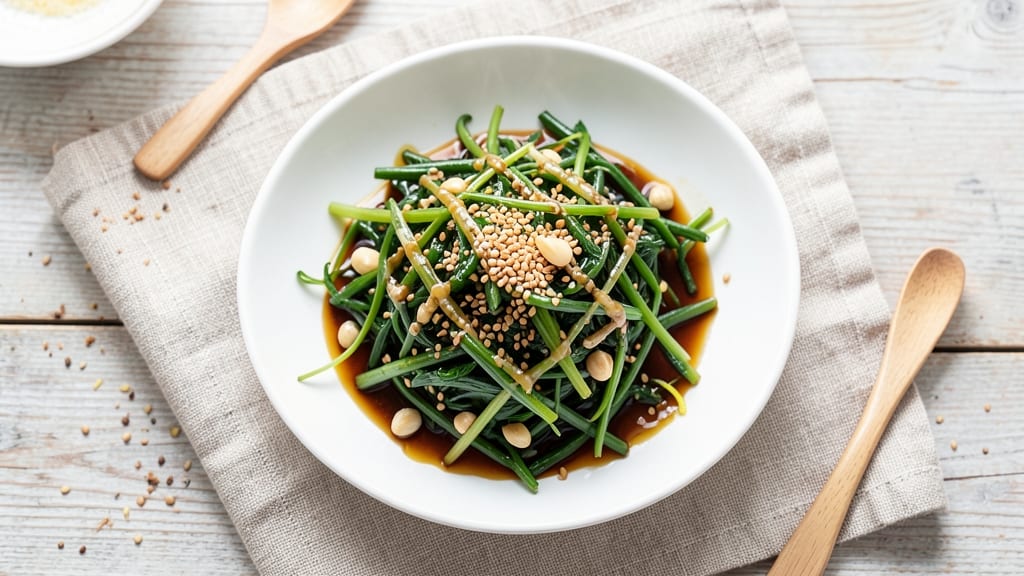
This bean sprout namul recipe delivers the perfect balance of crisp-tender texture and bold Korean flavors in just 15 minutes. The secret lies in precise blanching—briefly cooking the sprouts until they're bright green and slightly crisp, then finishing with a savory garlic-soy dressing that clings to every tender bite.
As a staple side dish in Korean meals, namul transforms simple ingredients into something restaurant-worthy with minimal effort.
The technique is straightforward but critical: blanching the sprouts in boiling water for exactly 30 seconds creates that signature crisp-tender texture, while the garlic-soy dressing adds depth without overpowering.
What makes this dish special is how it elevates any meal—whether served alongside grilled meats, fried rice, or as a standalone vegan side. The combination of sesame oil, toasted sesame seeds, and fresh garlic creates layers of flavor that stay balanced and satisfying.
By the time you're done, you'll have a vibrant, flavorful side dish that's as nutritious as it is delicious. The bright green color and irresistible crunch make it a crowd-pleaser, while the soy-garlic dressing ensures every bite is packed with umami.
This recipe proves that simple ingredients can deliver restaurant-quality results with the right technique.
Perfect for meal prep or serving immediately, this bean sprout namul keeps well in the fridge for up to 3 days, making it an ideal addition to your weekly cooking routine.
The versatility of namul means you can customize it with optional toppings like chili flakes or extra sesame seeds to suit your taste. Let's get started on this crisp-tender classic!
Ingredients for bean sprout namul
Fresh bean sprouts and bold flavors—just 11 ingredients for restaurant-quality namul.
| Ingredient | Amount | Notes |
|---|---|---|
| Mung Bean Sprouts 🌱 | 4 cups | Fresh, 2-3 inches long |
| Garlic Cloves 🧄 | 4 cloves | Fresh, minced finely |
| Soy Sauce 🍶 | ¼ cup | Korean or tamari preferred |
| Sesame Oil 🫒 | 1 tbsp | Toasted, for aroma |
| Toasted Sesame Seeds 🌾 | 1 tbsp | For garnish and crunch |
| Rice Vinegar 🍶 | 1 tbsp | White or seasoned |
| Sesame Seeds 🌾 | 1 tsp | Extra for topping |
| Salt 🧂 | ½ tsp | Kosher or sea salt |
| Gochugaru (Korean Red Pepper Flakes) 🌶️ | ½ tsp | Optional, for heat |
| Water 💧 | 4 cups | For blanching |
| Ice Cubes ❄️ | 2 cups | For shocking sprouts |
The sprouts are the star, so pick the freshest you can find—they should be bright green and crisp, not wilted or yellowing. Korean markets or well-stocked Asian grocery stores like H Mart or 99 Ranch carry the best quality. If you can't find mung bean sprouts, alfalfa or soybean sprouts work in a pinch, but mung has that signature texture. The garlic should be fresh too—smell it first; it should be pungent, not musty. For the soy sauce, Korean brands like Gochujang or tamari add depth, but regular soy sauce works if that's all you've got. Toast your sesame seeds in a dry pan for 2-3 minutes until golden—that aroma is everything.
No sesame oil? Avocado oil or neutral oil will work, but you'll miss that nutty depth. Short on rice vinegar? Apple cider vinegar or lemon juice adds brightness, though the flavor shifts slightly. The gochugaru is optional but worth it for that signature Korean heat—substitute cayenne at half the amount if you're in a hurry. For the blanching, boiling water must be fully hot before adding sprouts; otherwise, they'll turn mushy. And that ice bath? Non-negotiable—it locks in the crisp-tender texture. If you're prepping ahead, store the dressing separately until ready to toss; otherwise, the sprouts get soggy.
Blanched sprouts keep for 3 days in the fridge, but the texture degrades after day 2. Store them in a sealed container with paper towels to absorb excess moisture. The dressing? It lasts 1 week refrigerated, but the sesame oil will lose its aroma over time. For meal prep, blanch and shock the sprouts, then store dry—toss with dressing just before serving. Freezing isn't recommended; the texture turns mushy. If you make extra dressing, keep it in a small jar in the fridge—it's perfect for quick stir-fries or marinades too.
Why You'll Love This Recipe
- Five-Ingredient Magic: I swear by this recipe because it’s the kind of dish where you actually use everything. No forgotten spices, no extra bowls—just sprouts, garlic, soy sauce, a drizzle of sesame oil, and a sprinkle of seeds. That’s it. Honestly, my pantry always has these, so I’m never stuck.
- Crunchy-Garlicky Bliss: The texture is what makes this dish ridiculously good—those crisp sprouts with the soft, garlicky bite. Toss in a splash of soy sauce and a hit of sesame oil, and suddenly you’ve got a side that tastes like it took hours (but didn’t).
- Meal Prep MVP: Between us, this is my secret weapon for lazy Sundays. Cook a big batch, store it in the fridge, and it stays fresh for days—perfect for tossing into rice bowls, ramen, or even as a quick snack. No reheating required; just grab and go.
- Budget-Friendly Crunch: Mung bean sprouts are dirt cheap, and a little goes a long way. I buy them in bulk, and this recipe stretches them across multiple meals without breaking the bank. Plus, the flavor punches way above its price point—my wallet thanks me every time.
Step-by-step instructions for crisp-tender bean sprout namul
Achieve the perfect balance of texture and flavor with this precise blanching technique.
Prepare and Blanch the Mung Bean Sprouts
Fill a large pot with the 4 cups of water and bring to a rolling boil over high heat. While waiting, trim the ends off the 4 cups of mung bean sprouts with a sharp knife to remove any woody stems. This ensures even cooking and a cleaner texture.
Once boiling, add the trimmed sprouts and cook for exactly 1 minute. You'll see them turn a vibrant green and begin to soften slightly at the edges. Immediately drain them in a colander and stop cooking—overcooking turns them mushy. I use a timer to avoid this common mistake.
Shock and Drain the Sprouts
Transfer the drained sprouts to a large bowl and add the 2 cups of ice cubes. Stir gently to cool them rapidly, which stops the cooking process and preserves their crisp-tender texture. The ice water should turn slightly green from the chlorophyll release—this is normal and indicates proper blanching.
After 30 seconds, drain the sprouts again in a colander and give them a gentle shake to remove excess water. This step is crucial for preventing a soggy final dish. The sprouts should now be bright green with a slight crunch when squeezed between fingers.
Season with Garlic and Soy Sauce
In a large mixing bowl, combine the 4 cloves of minced garlic cloves, 0.25 cup of soy sauce, 0.5 teaspoon of salt, and 0.5 teaspoon of gochugaru (if using). Add the drained sprouts and toss gently but thoroughly to coat evenly. The garlic should release its aroma immediately—this is your cue that the seasoning is working.
Let the mixture sit for 2 minutes to allow the flavors to meld. This short resting period lets the soy sauce penetrate the sprouts, creating that signature umami depth. Don't skip this step—it makes all the difference in flavor development.
Finish with Sesame Oil and Vinegar
Drizzle the 1 tablespoon of sesame oil and 1 tablespoon of rice vinegar over the sprouts. Toss again until every sprout is lightly coated. The sesame oil adds nutty aroma while the vinegar brightens the dish with a subtle tang. You'll notice the texture becomes slightly glossy—this indicates proper coating.
Garnish immediately with 1 tablespoon of toasted sesame seeds and 1 teaspoon of sesame seeds. Sprinkle evenly over the top for that classic Korean crunch and visual appeal. The toasted seeds should be golden brown, not burnt—if they look too dark, reduce your toasting time next batch.
Serve Immediately for Optimal Texture
Transfer the bean sprout namul to a serving platter and serve while still slightly warm. The ideal serving temperature is room temperature to slightly warm—this preserves that perfect crisp-tender texture. If making ahead, store in an airtight container in the refrigerator for up to 2 days, but toss with a splash of water before serving to revive texture.
This dish pairs beautifully with grilled meats, rice, or as a side to Korean fried chicken. The balance of crisp, tender sprouts with the savory-sweet garlic-soy dressing makes it a versatile side that elevates any meal. Enjoy immediately while the texture is at its peak!
Pro Tips For Making Bean Sprout Namul
- Rinse Sprouts Twice: Cold water only—no soap—and give them a good shake in the colander. The first rinse removes dirt, the second chases away any lingering moisture that’ll make your namul soggy. I learned this the hard way when my batch turned into a sad, limp pile.
- Minimize Garlic Burn: Smash the cloves flat with the side of your knife before adding them to the pan. This exposes more surface area so they cook faster without turning bitter. After burning three batches, I finally figured out why my namul always tasted like regret.
- Toss Soy Sauce Last: Add sesame oil and seeds first, then fold in soy sauce at the very end—just before serving. The heat from the pan can cook out the freshness of the soy if you mix it in too early. Sounds weird, but it works: your namul stays bright and punchy.
- Use Dry Sprouts: Pat them thoroughly with a kitchen towel after rinsing—no wet spots. Even a little moisture turns your crispy namul into a mushy side note. I skip this when I’m lazy, but the dish is noticeably better when I don’t. (Your future self will thank you.)
Storing and reheating this recipe
Refrigerator Storage
Store blanched sprouts in an airtight container with a paper towel pressed on top to absorb moisture—this prevents sogginess. Keep them refrigerated for up to 3 days, but the texture degrades after day 2.
I always prep extra and store the dressing separately in a small jar. This way, you can toss the sprouts with fresh dressing right before serving. 💫
Freezing Limitations
Freezing isn't recommended for bean sprout namul—the texture becomes mushy when thawed. If you must store for longer than 3 days, blanch and shock the sprouts, then store them dry in a sealed container.
When ready to serve, toss with dressing and a splash of cold water to revive the crunch. The flavor stays intact, but the texture won't be as crisp.
Reheating for Texture
If storing for 1-2 days, reheat in a microwave-safe bowl with 1-2 tablespoons of water, covered, for 30 seconds. Stir well and add a drizzle of sesame oil to restore some shine.
For stovetop reheating, sauté in a nonstick pan over medium heat for 2-3 minutes—this helps crisp the edges slightly. Never reheat with high heat, or the sprouts will turn rubbery. ✨
Dressing Storage
The garlic-soy dressing keeps well in the fridge for 1 week in a small sealed jar. Toasted sesame seeds lose their crunch over time, so I store them separately and sprinkle fresh before serving.
If the dressing separates, give it a good stir—it's normal! For extra flavor, add a pinch of sugar or gochugaru when reheating to brighten the taste. 🍶
Reviving Stale Sprouts
If your stored namul loses its crunch, don't toss it! Toss the sprouts with 1 teaspoon of rice vinegar and ½ teaspoon of sesame oil, then let them sit for 5 minutes. The acidity helps restore some snap.
For a quick fix, spread them on a wire rack and broil for 1-2 minutes—just watch closely to avoid burning. This trick works wonders for stale namul! 🔥
Nutrition facts
Frequently asked questions
Can I use other types of bean sprouts instead of mung bean sprouts?
Mung bean sprouts are traditional, but you can substitute with alfalfa or soybean sprouts if needed. Just note that mung bean sprouts have a slightly sweeter flavor and more delicate texture. For best results, trim the ends carefully to match the length of mung bean sprouts, as this ensures even cooking during blanching.
Why is blanching so important for the texture?
Blanching for exactly 1 minute followed by an ice bath creates that signature crisp-tender texture. The hot water softens the sprouts slightly while the ice shock stops cooking instantly, preserving their bite. Overcooking turns them mushy, while undercooking leaves them too firm—precision is key!
Can I make this recipe ahead of time?
Yes, but store the blanched sprouts and dressing separately. Keep the sprouts in an airtight container with a paper towel for up to 3 days, and the dressing in a small jar for 1 week. Toss them together just before serving to maintain the perfect texture. For extra crunch, broil for 1-2 minutes if needed.
What can I do if my namul turns out too salty?
Add a splash of rice vinegar or a pinch of sugar to balance the flavors. For a more substantial fix, toss with 1 tablespoon of sesame oil and extra toasted sesame seeds—this adds richness and helps dilute the saltiness while keeping the dish flavorful.
Is this dish spicy? Can I adjust the heat level?
The recipe includes optional gochugaru for mild heat, but you can skip it completely for a neutral flavor. For more heat, add ½ teaspoon extra gochugaru or a dash of red pepper flakes. If you prefer a different spice profile, try a pinch of chili crisp or gochujang for deeper, sweeter heat.