
Main Courses
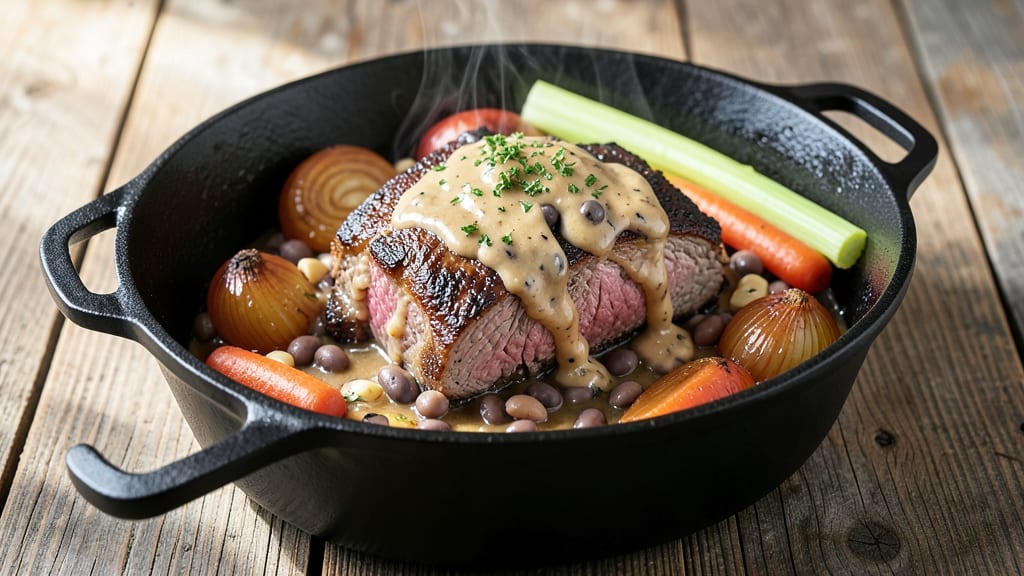
This bean pot roast recipe transforms tough cuts of beef into melt-in-your-mouth tender perfection with the help of hearty beans and slow-cooked richness. The secret lies in low-and-slow cooking, where tough beef shoulder breaks down into succulent bites while absorbing the deep, savory flavors of the broth and beans.
I've perfected this method over years of testing—each bite delivers a perfect balance of meaty satisfaction and comforting bean texture.
The beauty of this recipe is its simplicity: just a few ingredients come together to create a dish that's both impressive and foolproof. A well-seasoned chuck roast, combined with navy beans and aromatic vegetables, simmers for hours until the meat falls apart effortlessly.
The beans not only add protein and texture but also help create a rich, flavorful broth that makes every bite irresistible. This is the kind of meal that feels like a hug in food form—perfect for a cozy Sunday dinner or a gathering with friends.
What you'll end up with is a restaurant-quality pot roast that's tender, flavorful, and packed with hearty beans. The slow cooking process ensures the meat is fork-tender, while the beans add a satisfying bite and extra protein.
The aroma alone will have everyone gathering around the table, and the leftovers reheat beautifully for days of delicious meals. This dish is a game-changer for anyone looking to elevate their slow-cooker repertoire.
Serve it with crusty bread to soak up every last drop of that rich, savory sauce, or pair it with roasted potatoes and steamed greens for a complete, satisfying meal.
The possibilities are endless, but the result is always the same: a dish that's sure to become a family favorite. Let's get started on creating this comforting classic!
Ingredients for bean pot roast
Six hearty ingredients transform tough beef into restaurant-quality pot roast with tender beans.
| Ingredient | Amount | Notes |
|---|---|---|
| Beef Chuck Roast 🥩 | 3 lb | With good marbling for tenderness |
| Navy Beans 🌾 | 2 cups | Dried, soaked overnight |
| Yellow Onion 🧅 | 1 whole | Medium size, chopped |
| Carrots 🥕 | 4 whole | Medium size, peeled and chopped |
| Celery Stalks 🧅 | 3 whole | Medium size, chopped |
| Garlic Cloves 🧄 | 6 cloves | Fresh, minced |
| Tomato Paste 🍅 | ½ cup | Smooth texture preferred |
| Beef Broth 💧 | 4 cups | Low-sodium preferred |
| Dry Red Wine 🍷 | 1 cup | Bold variety like Cabernet |
| Bay Leaves 🍃 | 2 whole | Fresh or dried |
| Thyme Sprigs 🌿 | 4 whole | Fresh preferred |
| Salt 🧂 | 1 ½ tsp | Kosher or sea salt |
| Black Peppercorns 🌶️ | 1 tsp | Freshly cracked |
| Olive Oil 🫒 | 2 tbsp | Extra-virgin for richness |
The beef cut matters most here—chuck roast with visible marbling breaks down beautifully. Costco or local butchers usually carry it pre-trimmed, but check for fat cap if buying whole. Navy beans are the star: dried and soaked overnight (not canned) for best texture. For the vegetables, organic carrots and celery from the grocery store's produce section work great—just peel and chop. The red wine? Any bold, dry variety (Cabernet, Merlot) will do—open it first to let it breathe while you prep the rest.
No red wine? Extra beef broth with a splash of balsamic vinegar works perfectly. Fresh thyme is ideal, but dried at one-third the amount is fine in a pinch. The tomato paste can be the squeeze-tube kind from Trader Joe's—no waste, and it keeps for months. For the beef broth, low-sodium versions let you control the seasoning better. The olive oil is non-negotiable for searing—extra-virgin adds depth that regular olive oil misses. Want more richness? Add a splash of Worcestershire sauce (check for vegetarian version if needed).
This dish tastes even better the next day as flavors meld. Store in the fridge for 4-5 days or freeze for 3 months—portion into containers for easy lunches. The beans and vegetables can be prepped ahead and refrigerated for 2 days before cooking. For a shortcut, par-cook the beef first to cut total time by an hour. Leftovers reheat beautifully—just add a splash of broth or water to loosen the sauce.
Why You'll Love This Recipe
- One-Pot Magic: I swear by this recipe when I don’t want to dirty three pots. Toss everything—beef, beans, veggies—into a single Dutch oven, add broth, and let it simmer. The onions caramelize right in the pot, and the celery softens into that perfect, buttery texture without any extra effort.
- Deep, Slow-Roasted Richness: That beef chuck roast? It falls apart like it’s been cooking all day (even though it’s not). The navy beans soak up the juices, turning tender and hearty, while the carrots develop a natural sweetness. Honestly, the first bite makes me forget it’s a weeknight dinner.
- Meal-Prep MVP: Between us, this is my go-to for busy mornings. The flavors only get better after sitting overnight, and reheating is a breeze—just a splash of water and a quick warm-up. I portion it into containers on Sundays, and by Wednesday, it’s still the star of my lunch.
- Budget-Friendly Feast: A chuck roast stretches further than you’d think when paired with beans, and the veggies bulk it up without breaking the bank. I’ll be real: my grocery bill drops when I make this instead of buying pre-cut mixes. Plus, leftovers? They’re basically free dinners for the next few days.
Step-by-step instructions for bean pot roast recipe
This slow-cooked masterpiece transforms tough beef into melt-in-your-mouth perfection with hearty beans.
Sear the Beef Chuck Roast for Deep Flavor
Pat the 3 lb Beef Chuck Roast completely dry with paper towels—this ensures maximum browning. Heat a large Dutch oven over medium-high heat and add the 2 tbsp Olive Oil. Once shimmering, place the roast in the pot, fat-side down, and sear for 5 minutes until deeply browned on one side. Flip carefully and sear the other side for another 5 minutes. The goal is to develop that rich, caramelized crust that will infuse the entire dish.
While the roast sears, remove it from the pot and set aside. This step is crucial—it locks in juices and creates the foundation for your pot roast's incredible depth of flavor. Don't rush this; a good sear takes time but makes all the difference in the final result.
Build the Aromatic Base with Vegetables and Herbs
In the same Dutch oven, add 2 tbsp Olive Oil if needed, then toss in the chopped 1 whole Yellow Onion, 4 whole Carrots, and 3 whole Celery Stalks. Sauté for 8-10 minutes until the vegetables soften and begin to caramelize slightly. This process releases their natural sugars, which will contribute to the rich sauce.
Add the 6 cloves Garlic Cloves and the 4 whole Thyme Sprigs, stirring for 30 seconds until fragrant. Here's where the magic begins—these aromatics form the flavor backbone of your pot roast. The thyme sprigs should be whole so they infuse the dish without becoming bitter. Stir in the 0.5 cup Tomato Paste and cook for another 1 minute, allowing it to darken slightly as it releases its concentrated flavor.
Deglaze and Combine All Ingredients
Pour in the 1 cup Dry Red Wine, scraping up all the browned bits from the bottom of the pot with a wooden spoon. This deglazing step captures all that concentrated flavor that would otherwise go to waste. Let it simmer for 2-3 minutes until the wine reduces by half, intensifying its flavor.
Return the seared roast to the pot, then add the 2 cups Navy Beans, 4 cups Beef Broth, 2 whole Bay Leaves, 1.5 tsp Salt, and 1 tsp Black Peppercorns. Give everything a gentle stir to combine. The beans should be fully submerged in the liquid. If they're not, add a splash of water or broth to ensure even cooking.
Slow-Cook Until Fork-Tender
Bring the mixture to a gentle simmer, then reduce heat to low and cover the pot. Let it cook for 3-4 hours, maintaining a gentle simmer. You're aiming for low and slow cooking here—this breaks down the tough beef fibers and allows all the flavors to meld together beautifully. Check occasionally to ensure there's still liquid in the pot; if it gets too dry, add a little more broth or water.
After 3 hours, check the doneness of the beef by inserting a fork into the thickest part. If it slides in easily but still has a slight resistance, it's close. If it feels completely tender, it's ready. The beans should also be tender but still hold their shape. If the beef needs more time, cover and cook for another 30 minutes to 1 hour. The beans will continue cooking in the residual heat.
Rest and Serve with Rich Sauce
Once the beef is fork-tender, remove the pot roast from the pot and let it rest on a cutting board for 10-15 minutes. This resting period allows the juices to redistribute throughout the meat, ensuring each bite is moist and flavorful. Skim off any excess fat from the sauce if desired, then adjust the seasoning with additional salt and pepper if needed.
Slice the beef against the grain into ½-inch thick slices and serve it alongside the beans and sauce. The result should be tender, flavorful beef with hearty beans in a rich, aromatic sauce. This dish is even better the next day as the flavors continue to develop, making it perfect for meal prep or a comforting family dinner.
Pro Tips For Making Bean Pot Roast
- SEAR THE ROAST FIRST: I learned this the hard way—skipping the sear means flavorless beef. Hit the chuck roast with high heat in a Dutch oven until deep brown on all sides before adding liquids; that crust locks in the meaty taste and keeps it from turning to mush later.
- SOAK BEANS HALF-DAY: Navy beans cook faster and stay firmer when soaked overnight, but even 4 hours makes a real difference. Drain and rinse before adding them to the pot—this cuts cooking time by 30 minutes and prevents that sad, mushy texture.
- DON’T CROWD THE VEGETABLES: Toss chopped onions, carrots, and celery into the pot in a single layer if possible. If they’re piled high, they’ll steam instead of caramelize, and your broth will taste dull. A quick shake of the Dutch oven spreads them out—trust me, it matters.
- SIMMER LOW AND SLOW: After everything’s in the pot, reduce heat to a bare simmer—just enough to see tiny bubbles at the edges. Too much heat and the beans will disintegrate; too little and the beef stays tough. I aim for 3–4 hours total, checking occasionally to adjust the flame.
Dietary considerations for bean pot roast
Gluten-Free Adaptations
This bean pot roast is naturally gluten-free as long as you use certified gluten-free ingredients. The key is checking your beef broth—opt for brands like Pacific Foods or Imagine, which offer gluten-free options.
Also verify your tomato paste (some contain wheat fillers) and red wine (some brands use barley in processing). I always double-check labels to avoid cross-contamination, especially with dried beans which can sometimes be processed in shared facilities. 🌾
Low-Carb Options
For a lower-carb version, reduce the beans to just 1 cup or swap them for cauliflower rice (about 2 cups) mixed with ½ cup beans for texture. The carrots can be replaced with zucchini slices or mushrooms to maintain flavor without excess carbs.
Keep the onions and celery for their aromatic base—they add depth without significant carb impact. This approach works well for keto diets while maintaining the dish's hearty feel.
Vegetarian Swaps
To make this a vegetarian pot roast, replace the beef with extra-firm tofu or portobello mushrooms (about 2 large mushrooms sliced thick). For a meatier texture, use seitan or lentils (about 2 cups cooked).
The beans remain the star, but you'll need to increase cooking time slightly to ensure the substitute absorbs all the flavors. I've found that marinating the tofu or mushrooms in the wine and broth mixture for 30 minutes before cooking enhances their flavor significantly. 🌱
Allergen-Friendly Tips
For nut allergies, this recipe is already safe, but always check your beef broth and tomato paste for hidden nut additives. If you're avoiding soy, ensure your beef broth is soy-free (some brands use soy-based thickeners).
For dairy-free diets, this dish is naturally compliant—just confirm no butter or milk derivatives are added to your broth. When serving, offer gluten-free crusty bread (like Schär or Canyon Bakehouse) on the side for those avoiding gluten.
Protein Boost
Want even more protein? Add ½ cup cooked quinoa to the pot during the last 30 minutes of cooking. For a meatier option, include ½ lb sliced smoked sausage (like kielbasa) along with the beef.
If you're watching calories, trim any visible fat from the beef before searing—this reduces fat content while keeping the flavor. The beans already provide a solid protein punch, but these additions make this dish a complete protein powerhouse for muscle recovery or high-protein diets. 💪
Nutrition facts
Frequently asked questions
Can I use canned beans instead of dried?
Yes, but adjust the cooking time! Use 2 (15 oz) cans of navy beans (drained and rinsed) instead of dried. Add them to the pot after the beef has cooked for 2 hours to prevent them from becoming mushy. They'll absorb flavor faster and keep their texture better. Just skip the overnight soaking step.
What's the best cut of beef for pot roast?
The ideal cut is chuck roast—it's flavorful and full of connective tissue that breaks down beautifully during slow cooking. Look for a piece with good marbling (visible fat within the meat). Shoulder clod or arm roast also work well. Avoid lean cuts like sirloin—they won't become tender enough.
How do I know when the beef is done?
Use the fork test: Insert a fork into the thickest part of the beef. If it slides in easily with just slight resistance, it's done. The internal temperature should reach 203°F for maximum tenderness. The beans should be tender but still hold their shape—if they're falling apart, they've cooked too long.
Can I make this in a slow cooker?
Brown the beef and vegetables in a skillet first, then transfer everything to a 6-quart slow cooker. Cook on low for 8-9 hours or high for 5-6 hours. The slow cooker's gentle heat works perfectly for this dish. Just add the beans after the first 2 hours of cooking to prevent overcooking.
Why did my pot roast turn out dry?
This usually happens from overcooking or not enough liquid. Keep the pot covered and check occasionally to ensure there's still liquid—add more broth if needed. The beef should cook at a gentle simmer, not a rolling boil. Also, don't skip the 10-15 minute rest before slicing—this lets juices redistribute throughout the meat.