
Soups & Stews
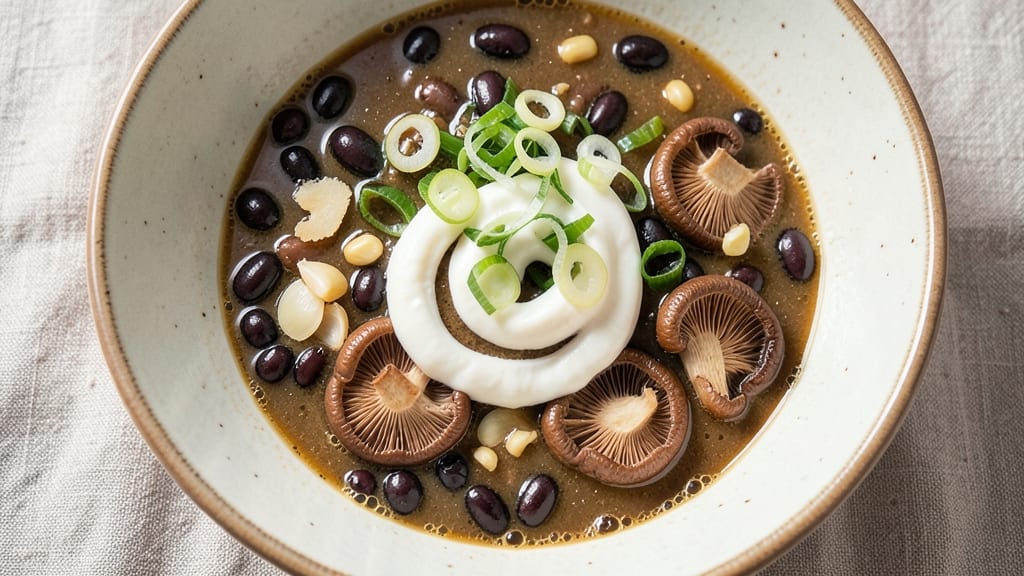
This black soybean soup transforms simple ingredients into a velvety, umami-rich dish with deep earthy notes and silky black bean texture. The secret lies in slow simmering—allowing the beans to soften while developing complex flavors that balance sweet, savory, and slightly nutty undertones.
Unlike quick soups, this one rewards patience with a broth so rich it coats every spoonful.
Traditional techniques meet modern twists here: we start with properly soaked black soybeans (never skip this step!) to ensure tender, creamy texture, then boost umami with a touch of miso and dried shiitake mushrooms.
The result is a soup that’s both comforting and sophisticated—perfect for chilly evenings or as a nourishing vegan main dish. Every bite delivers that satisfying contrast of silky beans against the smooth, aromatic broth.
What sets this recipe apart is the silky black bean texture achieved through precise cooking times and the right seasoning balance. The broth develops a deep, almost caramelized richness from the slow simmer, while optional garnishes like scallions and sesame oil add freshness.
This isn’t just another bean soup—it’s a restaurant-quality dish you can make at home with simple ingredients and a little time.
The best part? This soup tastes even better the next day as flavors meld further. Serve it with steamed rice or crusty bread to soak up every last drop of that velvety, umami-packed broth.
Ready to elevate your soup game? Let’s get started with this foolproof black soybean recipe that delivers professional results every time.
Ingredients for black soybean soup
Simple ingredients transform into a velvety, umami-packed black soybean soup with restaurant-quality depth.
| Ingredient | Amount | Notes |
|---|---|---|
| Black Soybeans (Dried) 🌱 | 1 cup | Soaked overnight for tenderness |
| Dried Shiitake Mushrooms 🍄 | 4 whole | Rehydrated in hot water |
| White Miso Paste 🧈 | 2 tbsp | For umami depth |
| Fresh Ginger 🧅 | 1 inch | Peeled, sliced thin |
| Garlic Cloves 🧄 | 4 cloves | Minced for aromatic base |
| Green Onions 🧅 | 3 whole | Sliced for garnish |
| Sesame Oil 🫒 | 1 tbsp | Toasted for finishing |
| Low-Sodium Vegetable Broth 💧 | 4 cups | Homemade or quality store-bought |
| Brown Sugar 🍯 | 1 tbsp | Balances flavors |
| Sesame Seeds 🌾 | 1 tsp | Toasted for crunch |
| White Rice Vinegar 🍶 | 1 tsp | Brightens the broth |
| Sea Salt 🧂 | 1 tsp | Adjust to taste |
| Tofu (Firm) 🍲 | 8 oz | Cubed for protein |
The black soybeans are the heart of this soup—never skip soaking them overnight. Most Asian markets carry them, but if unavailable, substitute adzuki beans in a pinch. Dried shiitake mushrooms from bulk bins add earthy depth—look for plump, firm caps. For the miso, White Diamond or Marukome brands deliver consistent quality. Fresh ginger should smell zesty and bright—no mold or shriveled spots. The tofu matters too: firm or extra-firm holds up best to simmering, while silken would turn mushy.
No dried shiitake? Fresh shiitake mushrooms at half the quantity work, but don't overcook them. Short on sesame oil? Toast regular sesame seeds and grind them for a budget-friendly alternative. The brown sugar can be swapped for maple syrup or agave for a vegan-friendly touch. For extra umami, add 1 tbsp soy sauce to the broth. The vegetable broth should be low-sodium—homemade or organic store brands avoid MSG. And if you're worried about the beans being too dense, blend a few into the broth for extra creaminess.
This soup tastes even better the next day—flavors meld beautifully when refrigerated. Store in an airtight container for up to 5 days, or freeze portions for 3 months. For meal prep, double the recipe and freeze half. Reheat gently on the stove with a splash of water to restore silky texture. Garnish with fresh green onions and sesame seeds just before serving to keep everything vibrant.
Why You'll Love This Recipe
- Fewer Ingredients, Bigger Impact: I swear by this recipe because it’s the kind of dish where you use five pantry staples and end up with something restaurant-worthy. No fancy techniques—just rehydrating dried shiitakes and simmering black soybeans until they’re tender and earthy. That’s it.
- Umami Bomb: The miso and garlic combo here? Chef’s kiss. The white miso melts into the broth, deepening the flavor without overpowering, while the garlic and ginger add a bright, punchy edge. It’s the kind of taste that lingers—good news if you’re the one who eats leftovers cold the next day.
- Weeknight or Guest Night: Honestly, this soup is my secret weapon for when I don’t feel like slaving over a meal. Toss it together while dinner burns, or serve it with steamed rice when unexpected company shows up. The black soybeans give it a rich, almost chocolatey depth that feels fancy without the effort.
- Budget Meal, Big Payoff: Dried black soybeans and shiitakes are dirt cheap compared to fresh ingredients, but they punch way above their weight. A single batch stretches for three meals—sip it hot, eat it cold over noodles, or even blend it into a quick sauce. My wallet thanks me every time.
Step-by-step instructions for black soybean soup
This method delivers a rich, velvety soup with perfect texture and balanced flavors every time.
Prepare the Black Soybeans and Shiitake Mushrooms
First, sort through the 1 cup black soybeans (dried) and remove any debris. Place them in a bowl and cover with plenty of cold water—at least 4 cups—to ensure they're fully submerged. Let them soak overnight in the refrigerator for maximum tenderness. I like to use a fine-mesh strainer to drain them the next day, reserving the soaking liquid if you prefer an even more flavorful broth.
While the beans soak, prepare the 4 whole dried shiitake mushrooms by placing them in a small bowl and covering with hot (not boiling) water. Let them soak for 20-30 minutes until fully rehydrated and pliable. This step is crucial—the mushrooms should expand significantly and become soft enough to slice easily with a sharp knife. Drain well before using, but don't rinse them as this removes valuable flavor.
Build the Umami-Packed Broth Base
In a large soup pot, combine the drained black soybeans, rehydrated shiitake mushrooms (sliced), 4 cloves minced garlic, and 1 inch peeled, thinly sliced ginger. Add the 4 cups low-sodium vegetable broth and bring to a gentle boil over medium-high heat. Once boiling, reduce heat to medium-low and let it simmer uncovered for 20-25 minutes, stirring occasionally to prevent sticking.
After simmering, taste the broth and adjust seasoning with 1 tsp sea salt and 1 tbsp brown sugar. The sugar helps balance the earthy flavors while adding subtle sweetness. Here's the thing—black soybeans have an intense flavor, so don't over-salt. The broth should be rich and deeply savory at this stage, with the mushrooms breaking down into the liquid and releasing their umami essence.
Incorporate Tofu and Miso for Depth
Cut the 8 oz firm tofu into ½-inch cubes and gently add them to the simmering broth. Let them cook for 5 minutes to absorb some of the flavors. In a small bowl, whisk together the 2 tbsp white miso paste with 1 tsp white rice vinegar and 1 tbsp sesame oil until smooth. Slowly ladle this mixture into the pot while stirring continuously to prevent the miso from clumping and to distribute it evenly throughout the broth.
Simmer the entire soup for another 10 minutes on low heat. The miso will dissolve completely, creating a velvety texture that coats every spoonful. The tofu should be heated through but still hold its shape. If the soup appears too thick, add ½ cup hot water to reach your desired consistency—black soybean soup should be silky but not gluey.
Finish with Aromatics and Garnish
Turn off the heat and let the soup sit for 5 minutes to allow the flavors to meld. While it rests, slice the 3 whole green onions into ¼-inch pieces (whites and greens separated) and toast the 1 tsp sesame seeds in a dry skillet over medium heat for 1-2 minutes until fragrant and golden. This toasting step enhances their nutty flavor and adds beautiful texture to the finished dish.
Before serving, stir in the green onion whites and ½ tsp toasted sesame seeds directly into each bowl. The green onion tops can be sprinkled on top as a garnish. The soup should have a deep black hue from the soybeans, with visible tofu cubes and shiitake slices suspended in the rich broth. Each spoonful should deliver layers of umami from the miso and mushrooms, balanced by the subtle sweetness of the brown sugar and the bright acidity of the rice vinegar.
Pro Tips For Making Black Soybean Soup
- SOAK BEANS 8 HOURS: I learned this the hard way—rushing the soak (even overnight) leaves black soybeans tough and chewy. Use cold water, swap it twice, and let them sit at least 8 hours. The first soak breaks down their stubborn skins, and the second rinse washes away the starch that makes them gummy.
- SIMMER LOW AND LONG: Black soybeans need patience—don’t boil them. Once the water covers the beans, reduce to a bare simmer (tiny bubbles, just enough to keep them moving) and cook for 2–3 hours. I used to rush this, and the beans turned to mush. Low heat keeps them tender without falling apart.
- REHYDRATE SHIITAKES RIGHT: Skip the microwave—soak dried shiitakes in hot water (not boiling) for 20 minutes instead. Cold water leaves them rubbery, and boiling water bleaches their flavor. After soaking, squeeze out the excess water before adding to the pot, or your soup will turn into a shiitake smoothie.
- STIR IN MISO LAST: Add white miso paste when the soup is nearly done, not at the start. The heat will kill its probiotics and make the flavor bitter. Stir it in off the heat for 1–2 minutes—just enough to meld, not cook. Sounds weird, but it works: the miso stays bright and complex, not flat.
Make-ahead tips for this recipe
Overnight Prep Advantage
Start your black soybean soup prep the night before by soaking the 1 cup dried black soybeans in 4 cups cold water for at least 8 hours (or overnight). This step is non-negotiable—it transforms tough beans into tender, creamy morsels.
I like to use a quart-sized mason jar with a tight lid to prevent spills. The longer they soak, the more flavorful your broth will be. Trust me, this is where the magic happens. 🌱
Mushroom Prep Shortcut
Rehydrate the 4 dried shiitake mushrooms while you sleep by covering them with hot water in a small bowl. By morning, they'll be plump and ready to slice. Pro tip: Use the same water they soaked in as part of your broth—it's packed with mushroom flavor.
If you're short on time, fresh shiitake mushrooms work too, but reduce the quantity by half and cook them for just 5 minutes to avoid mushiness.
Broth Boosting
For an extra umami punch, prepare your broth ahead of time. Simmer the 4 cups vegetable broth with the 1-inch ginger and 4 garlic cloves for 10 minutes and store it in the fridge. This pre-flavored broth cuts down on cooking time later and deepens the overall flavor profile.
I often make a big batch and freeze it in ice cube trays for future use—just thaw and heat before adding to the pot.
Tofu Pre-Cooking
Save time by pressing and pre-cooking the 8 oz firm tofu the day before. Wrap it in a clean kitchen towel, place a heavy pan on top, and let it drain for 30 minutes. Then, pan-fry the tofu cubes in 1 tbsp sesame oil until golden on all sides.
Store in the fridge and reheat gently in the soup. This step adds incredible texture and saves you from cooking it fresh during the final simmer. 💡
Flavor Layering
Combine the miso paste, rice vinegar, and sesame oil in a small bowl the night before. This umami trio can be stored in the fridge until ready to use. When you're ready to finish the soup, simply whisk it into the simmering broth.
This prep step ensures perfect flavor distribution without the risk of clumping during cooking. The acidity from the vinegar brightens the earthy flavors, while the sesame oil adds richness.
Make-Ahead Serving
This soup tastes even better the next day as flavors meld beautifully. Store leftovers in an airtight container in the fridge for up to 5 days or freeze for 3 months. When reheating, add 2-3 tablespoons of water to restore silky texture.
Garnish with fresh green onions and toasted sesame seeds just before serving to keep everything vibrant and fresh-tasting. The broth will be even more concentrated and flavorful after resting. ✨
Nutrition facts
Frequently asked questions about black soybean soup
Why do black soybeans need to soak overnight?
Soaking overnight (at least 8 hours) is essential because dried black soybeans have tough skins that won't soften properly otherwise. This step creates their signature silky, creamy texture—without it, they'll stay hard and chewy. The longer they soak, the more flavor they release into the broth too. Think of it as the secret to that restaurant-quality mouthfeel!
Can I substitute dried shiitake mushrooms?
Use fresh shiitake mushrooms at half the quantity (2 mushrooms instead of 4 dried). Cook them for just 5 minutes in the broth to avoid mushiness. The flavor will be slightly less concentrated, but still delicious. For extra umami, add ½ tsp dried porcini powder to the broth instead.
How do I fix soup that's too thick?
If your soup thickens too much during simmering, simply add ½ cup hot water at a time while stirring until you reach your desired consistency. Black soybean soup should be silky but not gluey. For prevention, don't cover the pot while simmering—this helps maintain the right texture. The beans naturally release starch as they cook, which is what creates that velvety quality.
Is this soup gluten-free?
Yes, this recipe is naturally gluten-free! Just ensure your miso paste is certified gluten-free (many white misos are) and that your vegetable broth doesn't contain wheat-based thickeners. The black soybeans, mushrooms, and other ingredients are all gluten-free by default. Always check labels for hidden gluten sources.
What makes this soup different from regular bean soups?
Black soybean soup stands out because of its deep earthy flavor and silky texture from the beans, plus the umami boost from miso and shiitake mushrooms. Unlike common bean soups, it has a richer, more complex profile that balances sweet, savory, and slightly nutty notes. The slow simmering technique develops these flavors in a way that quick bean soups can't match.