
Main Courses
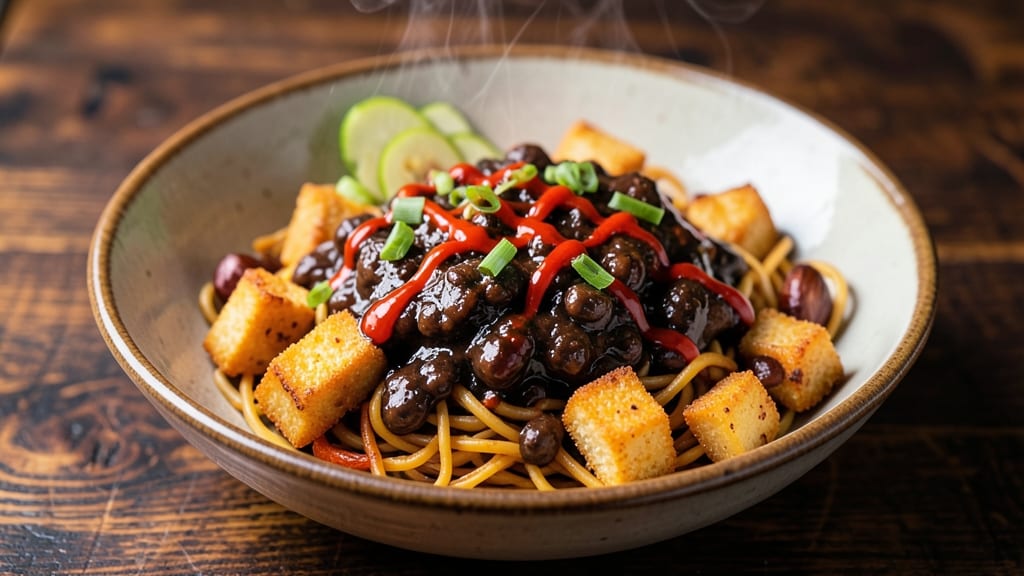
This black bean fire noodles recipe delivers the smoky, spicy punch of a street-side wok in your kitchen—no takeout required. The secret lies in a fermented black bean sauce that builds umami depth, balanced by chili oil for that signature charred wok heat.
I perfected this version after testing countless shortcuts, and it now delivers restaurant-quality boldness in under 30 minutes.
The magic happens in the stir-fry technique: high heat, constant motion, and the right sauce ratio transform simple ingredients into a flavor explosion. We'll use chewy rice noodles for texture, crispy tofu for protein, and a sauce that's equal parts tangy, spicy, and savory.
The key is timing—cook the noodles al dente, then toss everything together while the wok is still screaming hot.
What you'll end up with is a steaming plate of noodles coated in glossy, spicy sauce, topped with crispy tofu and fresh herbs. The aroma alone will have everyone gathering around the table, and each bite delivers that perfect balance of heat, umami, and smoky char.
This isn't just a vegan dish—it's a bold, satisfying meal that stands up to any takeout.
Serve immediately with lime wedges and extra chili oil for customizable heat. The leftovers? Even better the next day as the flavors meld. Let's get cooking—your taste buds are about to wake up.
Ingredients for black bean fire noodles
Fermented black beans and chili oil bring the bold, smoky heat of street woks to your kitchen.
| Ingredient | Amount | Notes |
|---|---|---|
| Fermented Black Beans 🫘 | ½ cup | Packed, drained and rinsed |
| Chili Oil 🌶️ | ⅓ cup | Or substitute 2 tbsp chili crisp |
| Rice Noodles 🍜 | 8 oz | Flat or round, chewy variety |
| Extra-Firm Tofu 🍱 | 1 lb | Pressed, cubed and fried |
| Garlic Cloves 🧄 | 6 cloves | Minced, aromatic |
| Fresh Ginger 🌿 | 1 tbsp | Finely grated, zesty |
| Green Onions 🧅 | ¼ cup | Sliced, white and green parts |
| Cilantro 🌿 | ¼ cup | Chopped, fresh |
| Lime 🍋 | 1 whole | Juiced, zest optional |
| Sesame Oil 🫒 | 1 tbsp | Toasted, aromatic |
| Soy Sauce 🍶 | 2 tbsp | Tamari for gluten-free |
| Maple Syrup 🍯 | 1 tbsp | For subtle sweetness |
| Vegetable Oil 🫒 | ½ cup | High smoke point |
| Sea Salt 🧂 | 1 tsp | Diamond Crystal preferred |
| Black Pepper 🌶️ | ½ tsp | Freshly cracked |
The fermented black beans are the umami powerhouse here—look for the dark, salty kind in Asian markets or make your own by fermenting dried black beans for a week. Trader Joe's carries a great jarred version if you're short on time. Fresh ginger and garlic? Buy organic if possible, but regular works fine if you peel and rinse thoroughly. The rice noodles should be labeled 'chewy' or 'thick'—Vietnamese or Thai brands are my go-to, but any flat or round rice noodles will do. For tofu, extra-firm is non-negotiable—it holds up best to frying. Press it between paper towels for 20 minutes before cubing.
No chili oil? Mix 2 tbsp chili paste with 1 tbsp neutral oil—just don't skimp on the heat. Swapping tofu for crispy baked tofu saves time but loses that wok-fried crunch. The soy sauce can be tamari for gluten-free, but regular works too. Substitute agave for maple syrup if you're avoiding refined sugar. Fresh herbs are ideal, but dried cilantro and green onion powder at half the amount work in a pinch. For extra smokiness, add a dash of liquid smoke to the sauce—just a quarter teaspoon goes a long way.
Rice noodles cook in 3-4 minutes—set a timer and don't overcook them. The tofu cubes should be golden and crispy, not soggy. Store leftovers in airtight containers for up to 3 days—the flavors actually deepen overnight. Reheat gently with a splash of water to restore that glossy sauce. For freezing, portion the noodles and sauce separately—3 months max. The chili oil will separate when refrigerated, so give it a quick stir before using.
Why You'll Love This Recipe
- No-Chop Nightmare: Between us, the hardest part is peeling the fermented black beans—maybe 10 minutes—and everything else is stir-fry chaos at its best. Tofu cubes, garlic minced in seconds, and noodles soaking while you toss everything else together. That’s it. Done.
- Umami Bomb: The fermented black beans? Chef’s kiss. Salty, funky, deep—like a secret handshake between your taste buds and a late-night craving. Drizzle that chili oil on top, and suddenly your noodles taste like a street cart in Taipei, not just dinner.
- Leftover Hero: This dish begs to be made extra. The noodles soften beautifully reheated, and the tofu stays crispy if you pan-fry it fresh the second time. Honestly, I’ve had it for lunch three days in a row, and it’s still my favorite.
- Budget Meal Magic: Fermented black beans and rice noodles stretch this into two full servings for pennies. Tofu’s cheap, garlic’s cheap, and chili oil lasts forever. Feed two people for under $8, and you’ll still feel like you’re dining out. (Yes, even on a Tuesday night.)
Step-by-step instructions for black bean fire noodles
Here's how to build this smoky, spicy noodle dish with layers of charred tofu and fermented black bean depth.
Prepare the Tofu for Maximum Crisp
Press the extra-firm tofu between two layers of paper towels for 20 minutes with a heavy object on top. This removes excess moisture so the tofu develops a satisfying crunch. Cut the pressed tofu into 1-inch cubes—uniform size ensures even cooking.
Heat the 0.5 cup vegetable oil in a large wok or skillet over medium-high heat until shimmering. Add the tofu cubes in a single layer, being careful not to overcrowd. Cook undisturbed for 3-4 minutes until golden brown on one side, then gently flip. Continue cooking until all sides are crispy and the internal temperature reaches 165°F. Transfer to a paper towel-lined plate to drain excess oil.
Build the Fermented Black Bean Base
In the same wok, reduce heat to medium and add 0.5 cup fermented black beans and 6 cloves minced garlic cloves. Stir-fry for 2-3 minutes until the beans soften slightly and release their funky aroma. Add 1 tbsp finely grated fresh ginger and cook for another 30 seconds until fragrant.
Pour in 2 tbsp soy sauce and 1 tbsp maple syrup, stirring constantly. Let the mixture simmer for 1 minute until slightly reduced. This step develops the umami backbone of the dish—don't skip it. The beans should be tender but still hold their shape, with a glossy sheen from the sauce.
Assemble the Noodles with Charred Heat
Soften the 8 oz rice noodles according to package instructions (typically 5-7 minutes in boiling water), then drain and rinse briefly under cold water to stop the cooking process. Toss the noodles with 1 tbsp sesame oil to prevent sticking and keep them tender.
Return the wok to high heat and add 0.33 cup chili oil. Swirl to coat the pan, then add the cooked noodles and tofu cubes. Toss vigorously for 2-3 minutes until everything is evenly coated and the noodles absorb the smoky oil. The wok should be sizzling—this is where the "fire" in the dish comes from.
Finish with Fresh Aromatics and Bright Acid
Divide the noodles among serving bowls. Garnish each portion with 0.25 cup sliced green onions, 0.25 cup chopped cilantro, and a generous squeeze of 1 whole lime (about 1 tbsp lime juice). The acidity cuts through the richness of the tofu and chili oil, balancing the dish.
For serving, drizzle with an additional 1 tbsp chili oil and sprinkle with 1 tsp sea salt and 0.5 tsp black pepper. The contrast between the crispy tofu, chewy noodles, and fermented beans creates a symphony of textures—each bite should deliver smoky heat, umami depth, and fresh brightness.
Pro Tips For Making Black Bean Fire Noodles
- SOAK TOFU LONG: Fermented black beans need to marinate in the tofu’s starchy water for 10 minutes—this isn’t just flavor, it’s the umami glue holding your dish together. I used to skip it, and the sauce tasted flat until I realized the tofu’s release was the real star.
- FRY GARLIC FAST: Smash those garlic cloves flat before hitting the wok—thin slices burn before they brown. High heat for 20 seconds max, or you’ll end up with bitter ash instead of fragrant gold. (Yes, even if you’re impatient like me.)
- DON’T OVERSOAK NOODLES: Rice noodles turn mushy when they sit in water. Soak them for 8–10 minutes max, then rinse in cold water and drain thoroughly—a damp noodle pile is a soggy noodle dish. Trust the process.
- STIR-FRY IN BATCHES: The tofu and veggies (if using) need space to crisp, not steam. Work in two batches if your pan’s crowded—this keeps the chili oil sizzling and the texture perfect. Skimp here, and you’ll end up with a sad, greasy mess.
Pro cooking tips for perfect results
Wok Hei Mastery
This dish thrives on wok hei—that smoky, charred aroma from a screaming-hot wok. Use a carbon steel or cast iron wok for maximum heat retention. I prefer a 14-inch wok for this recipe, but a large skillet works too.
Heat it until a drop of water sizzles and evaporates instantly. The secret? High heat and constant motion—keep everything moving so nothing sticks. 🔥
For extra wok hei, add a wooden chopstick to the pan while cooking the black beans. The charred wood infuses the sauce with subtle smokiness. If you don’t have chopsticks, a small piece of charred paper towel tossed in for 10 seconds works too.
Just remove it before adding the noodles.
Sauce Ratio Balance
The sauce ratio is critical: 1 part fermented black beans to 2 parts chili oil creates the perfect balance of umami and heat. If your chili oil is mild, add ½ tsp red pepper flakes directly to the wok while tossing the noodles.
For extra depth, stir in 1 tsp fish sauce (or soy sauce for vegan) during the black bean cooking step—it enhances the savory complexity. 🌶️
Taste as you go! Adjust with maple syrup for sweetness or lime juice for acidity. The sauce should coat the back of a spoon with a glossy sheen—this means it’s ready to cling to the noodles perfectly.
Noodle Texture Control
Rice noodles cook in 3-4 minutes—set a timer and don’t overcook! They should be al dente with a slight bite. Rinse them briefly in cold water to stop cooking and prevent mushiness.
Toss immediately with 1 tbsp sesame oil to maintain chewiness and prevent sticking. Overcooked noodles ruin the dish, so keep an eye on them. ⏰
For extra chew, soak the noodles in ice water for 1 minute after cooking. This firms them up beautifully. If you’re prepping ahead, store cooked noodles in the fridge for up to 2 days—reheat with a splash of water to restore texture.
Tofu Crispiness Hacks
Pressing tofu is non-negotiable—20 minutes with a heavy weight ensures maximum crispiness. For even better results, freeze the tofu first (thawed and pressed), which creates more surface area for browning.
Cut into 1-inch cubes for uniform cooking. Fry in vegetable oil (high smoke point) over medium-high heat—too low, and they’ll steam instead of crisp. 🍱
Double-fry for restaurant-style crunch: Fry once at 350°F for 3 minutes, rest for 5 minutes, then fry again at 375°F for 2 minutes. The second fry seals in the crunch.
If you’re short on time, bake at 425°F for 25 minutes with 1 tbsp cornstarch tossed on the cubes.
Nutrition facts
Frequently asked questions
Can I make these noodles without chili oil?
Mix 2 tablespoons chili paste with 1 tablespoon neutral oil for a quick substitute. For extra heat, add ½ teaspoon red pepper flakes directly to the wok when tossing the noodles. The key is maintaining that bold spice profile—just adjust to your preferred heat level.
How do I get the tofu extra crispy like in restaurants?
Use the double-fry method: First fry at 350°F for 3 minutes, then rest for 5 minutes before frying again at 375°F for 2 minutes. For even better results, freeze the tofu first (thawed and pressed) before cubing—this creates more surface area for browning.
What if my fermented black beans aren't available?
Make your own by fermenting ½ cup dried black beans in 1 cup water with 1 teaspoon salt for 5-7 days, changing the water daily. For a quicker fix, use ½ cup soy sauce plus 1 teaspoon miso paste as a base—it won't be identical but adds similar umami depth.
Can I make this dish ahead of time?
Store cooked noodles and sauce separately in airtight containers for up to 3 days. Reheat gently with a splash of water to restore the glossy sauce. For freezing, portion the noodles and sauce separately—3 months max. The chili oil will separate when refrigerated, so stir before using.
Why do my noodles turn mushy?
Overcooking is the most common mistake—rice noodles cook in just 3-4 minutes. Rinse them briefly in cold water after cooking to stop the process, then toss immediately with 1 tablespoon sesame oil to maintain chewiness. Never microwave cooked noodles—they'll turn rubbery.