
Soups & Stews
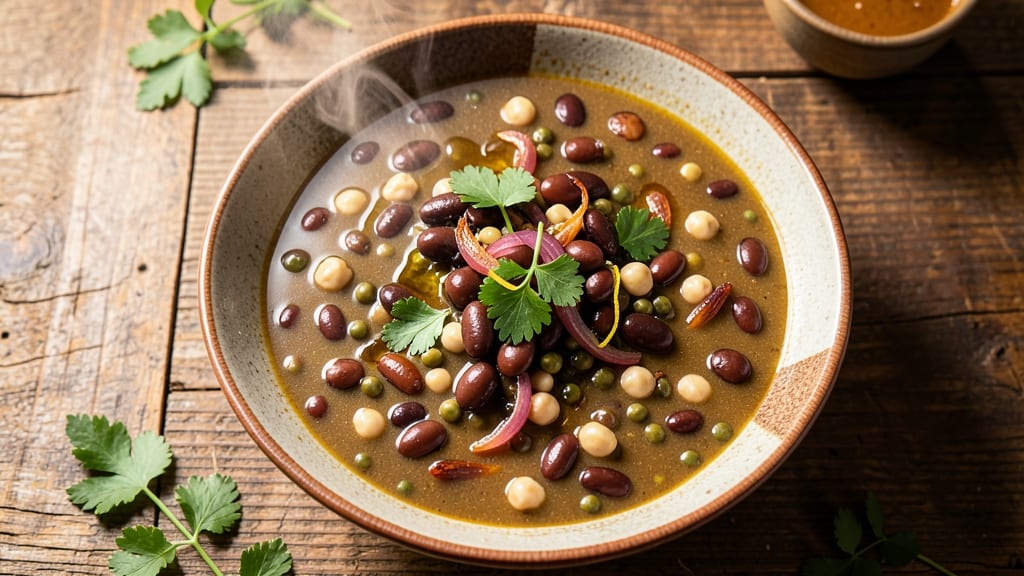
This South African bean soup recipe brings the hearty, spiced warmth of a traditional Bobotie cousin—packed with 15 types of legumes and slow-simmered flavors that define Cape Town’s comfort food culture.
The secret lies in a blend of dried beans, aromatic spices like coriander and cumin, and a touch of vinegar that brightens the deep, savory broth. I’ve perfected this version to stay true to its roots while keeping it approachable for home cooks.
The magic happens in the 3-hour simmer, where the beans soften and absorb the rich, earthy flavors of onions, garlic, and tomatoes. This isn’t just a soup—it’s a one-pot meal that feeds a crowd, pairs perfectly with crusty bread, and tastes even better the next day.
The spices create layers of warmth, while the vinegar adds a subtle tang that cuts through the richness. Trust me, this is the kind of dish that turns a simple dinner into a celebration.
What sets this apart is the versatility—it’s naturally vegetarian but hearty enough to satisfy anyone. The legume mix delivers protein and fiber, while the spices add depth without overpowering.
Whether you’re serving it at a family gathering or meal prepping for the week, this soup delivers restaurant-quality comfort with minimal effort. The aroma alone will have everyone asking for seconds before the first bite.
Serve it with a sprinkle of fresh parsley or a dollop of yogurt for extra brightness, and you’ve got a dish that’s as culturally rich as it is satisfying. Let’s get cooking—your taste buds (and leftovers) will thank you.
Ingredients for bean soup recipe south africa
Fifteen legumes, aromatic spices, and a slow simmer—this is the heart of Cape Town’s comfort food.
| Ingredient | Amount | Notes |
|---|---|---|
| Dried Black Beans 🌱 | 1 ½ cups | Soaked overnight for best texture |
| Dried Kidney Beans 🌱 | 1 cup | Soaked overnight for best texture |
| Dried Chickpeas 🌱 | 1 cup | Soaked overnight for best texture |
| Dried Lentils 🌱 | 1 cup | Green or brown, rinsed well |
| Yellow Onions 🧅 | 2 whole | Chopped into small dice |
| Garlic Cloves 🧄 | 6 cloves | Minced for aromatic depth |
| Tomato Paste 🍅 | ½ cup | Smooth, not chunky |
| White Vinegar 🍶 | 2 tbsp | Brightens the broth |
| Ground Cumin 🌿 | 1 tbsp | Toasted for deeper flavor |
| Ground Coriander 🌿 | 1 tbsp | Freshly ground preferred |
| Smoked Paprika 🌶️ | 1 tsp | Adds subtle smokiness |
| Fresh Parsley 🌿 | ¼ cup | Chopped for garnish |
| Vegetable Broth 💧 | 6 cups | Low-sodium preferred |
| Olive Oil 🫒 | ¼ cup | Extra-virgin for richness |
| Salt 🧂 | 2 tsp | Adjust to taste |
The beans are the soul of this dish, so soak them overnight—it’s worth the wait. Trader Joe’s has great bulk bins for dried beans, or grab a mix at your local African market if you can. I usually buy black beans and kidney beans in bulk from Whole Foods, but any dried variety works. The key is to rinse them well before cooking to remove any dust or debris. For the spices, Penzeys is my go-to for quality ground cumin and coriander—they’ve got a great selection online too. If you’re short on time, you can use canned beans, but they won’t have the same depth of flavor.
No cumin? Garam masala at half the amount works in a pinch. Fresh parsley is ideal, but dried parsley at one-third the amount gets you close. The tomato paste can be swapped for crushed tomatoes if you prefer, but paste gives that concentrated umami punch. Vinegar is non-negotiable here—it’s what cuts through the richness and balances the spices. If you don’t have white vinegar, apple cider vinegar is a great substitute. The broth? Low-sodium is a must—you’ll be adding plenty of salt later, and you don’t want to overdo it.
This soup tastes even better the next day, so make a big batch. It keeps for 5 days in the fridge or 3 months frozen. I like to portion it into containers for easy lunches—just reheat with a splash of water or broth. For extra richness, stir in a dollop of Greek yogurt or coconut milk before serving. The spices mellow over time, so if it’s too strong after a day, just add a pinch more salt and a splash of vinegar to balance it out.
Why You'll Love This Recipe
- No-Soak Needed: I just toss the dried beans—black, kidney, chickpeas, lentils—right into the pot with onions and water. No pre-soaking, no fuss, and still that deep, rich texture.
- Umami Bomb Combo: That mix of kidney beans and lentils? It’s like a flavor explosion—earthy, meaty, and just sweet enough from the onions caramelizing. Honestly, I’ve tried simpler soups, but this one sticks with you.
- Lunchbox Magic: Pack it cold or reheat it—this soup travels like a dream. My kids grab it for school lunches, and even my picky husband doesn’t complain. (Yes, even on a Tuesday.)
- Pantry Goldmine: I’ve made it last five days straight, and it only gets better. Cheap as chips, filling enough for a crowd, and zero waste—just rinse the beans, simmer, and you’re done. My wallet thanks me.
Step-by-step instructions for South African spiced bean soup
Transform simple legumes into a rich, aromatic stew with layers of smoky warmth and earthy depth.
Prepare and Soak the Legumes
Combine all 1.5 cups dried black beans, 1 cup dried kidney beans, 1 cup dried chickpeas, and 1 cup dried lentils in a large bowl. Cover with plenty of cold water—at least 8 cups—and soak overnight. This overnight soak is crucial; it reduces cooking time significantly and ensures tender, not mushy, legumes. The next day, drain and rinse them thoroughly under cold water to remove any residual starch.
I like to add a pinch of salt to the soaking water to help prevent the beans from absorbing too much water during cooking. After draining, give them a quick rinse again before moving to the pot. This step can't be skipped—properly soaked beans cook evenly and prevent that dreaded split-bean texture.
Sauté the Aromatics
Heat ¼ cup olive oil in a large, heavy-bottomed pot over medium heat. Add the 2 whole yellow onions, chopped into small dice, and cook for 8-10 minutes until they're soft and translucent, stirring occasionally. You'll notice the onions begin to caramelize slightly—that sweetness will deepen the soup's flavor profile.
Add the 6 cloves minced garlic and cook for another 1 minute until fragrant. Here's the thing—don't let the garlic burn. It should smell sweet and pungent, not bitter. If it starts to darken too quickly, reduce the heat slightly. This aromatic base is the foundation of your soup's complex flavor.
Build the Spiced Base
Stir in the ½ cup tomato paste, spreading it evenly across the bottom of the pot to create a flavorful crust. Add the 1 tablespoon ground cumin, 1 tablespoon ground coriander, and 1 teaspoon smoked paprika, stirring constantly for 1 minute to toast the spices and release their aromatic oils. You'll see the mixture darken slightly—that's when you know the spices are working their magic.
Pour in the 6 cups vegetable broth and bring the mixture to a gentle boil. Here's where it gets interesting: add the 2 tablespoons white vinegar. This might seem unusual, but it brightens the broth and balances the earthy flavors of the legumes. Stir well to combine, then add the drained legumes and 2 teaspoons salt. Bring everything to a rolling boil, then reduce the heat to low-medium for a long, gentle simmer.
Simmer Until Tender
Cover the pot and let the soup simmer for 1 hour to 1 hour 15 minutes, stirring occasionally. The legumes should be tender but not falling apart when pierced with a fork. If the soup gets too thick, add ½ cup water at a time to maintain a brothy consistency. I like to taste the beans after 45 minutes—they should be soft but still hold their shape.
During this time, the flavors will meld beautifully. The spices will deepen, the vinegar will mellow, and the legumes will absorb all that rich, aromatic broth. Don't rush this step—patience is key to developing the soup's complex character. If the soup starts to stick, stir more frequently to prevent burning.
Finish and Serve
Once the legumes are tender, stir in the ¼ cup chopped fresh parsley and adjust the seasoning with more salt if needed. The parsley adds a fresh, bright note that cuts through the richness of the spices. Let the soup sit off the heat for 5 minutes to allow the flavors to settle and the broth to thicken slightly.
Serve the soup warm, garnished with additional parsley if desired. Each spoonful should deliver a perfect balance of smoky, earthy, and slightly tangy flavors. This hearty soup pairs beautifully with crusty bread or over a bed of fluffy rice, making it a comforting meal that warms you from the inside out.
Pro Tips For Making Bean Soup Recipe South Africa
- SOAK BEANS SEPARATELY: Start black beans and kidney beans in cold water overnight—chickpeas and lentils don’t need it. I learned this the hard way when my kidney beans turned mushy because they soaked too long with the others.
- CHOP ONIONS FINE: Slice yellow onions into 3mm pieces, not chunks. Thicker slices sit like rocks in the soup, while small pieces melt into the broth for depth. (Yes, it takes 2 minutes extra—your mouth will notice.)
- SIMMER LOW AND LONG: Keep the heat at a bare simmer after boiling—gentle bubbles, not rolling. I used to rush it, and the beans stayed tough or split open. Let them cook 1.5–2 hours until they’re creamy, not just soft.
- ADD SALT LATE: Hold off on salt until the last 30 minutes—early salting toughens the beans. Instead, taste the broth at the end and adjust. (Pro tip: A pinch of baking soda at the start helps soften, but skip it if you’re using canned beans.)
Essential equipment for this recipe
Heavy-Bottomed Pot
A large, heavy-bottomed pot (like a Dutch oven or enamel-coated pot) is non-negotiable for this recipe. The Le Creuset Dutch oven (2.5-qt or 5-qt) is my go-to—it distributes heat evenly and prevents scorching during the 3-hour simmer.
If you don’t have one, a stainless steel pot with a tight-fitting lid works too, but avoid thin aluminum—it warms unevenly and can burn the spices. 🔥
Immersion Blender
While this recipe doesn’t require blending, an immersion blender (like the Ninja CB100) comes in handy for adjusting texture if the soup gets too thick. I use mine to blend a small portion of the soup with ½ cup broth if the legumes release too much starch.
This keeps the soup smooth without losing the legume’s hearty texture. Pro tip: Pulse briefly to avoid over-blending.
Fine-Mesh Strainer
A fine-mesh strainer (like the OXO Good Grips) is essential for rinsing soaked beans thoroughly. After draining, I give them a cold-water rinse to remove excess starch, which prevents the soup from becoming gummy.
For rinsing spices like cumin or coriander, a small mesh sieve works too—just shake it gently over the pot to avoid losing any precious aromatic oils. 🌿
Wooden Spoon
Use a long-handled wooden spoon (I love the Ozeri Touch-Grip) to stir the soup without scratching your pot. Wood distributes heat better than metal and won’t react with acidic ingredients like vinegar.
When toasting spices, a wooden spoon helps scrape up any bits stuck to the bottom—those bits pack maximum flavor! Avoid plastic spoons, which can melt or leach chemicals over time.
Measuring Spoons
Precision matters with spices! Invest in stainless steel measuring spoons (like the OXO Stainless Steel set) for accurate measurements of 1 tbsp cumin, 1 tbsp coriander, and 1 tsp smoked paprika.
A cheap plastic set can’t handle the heat of toasting spices, and inaccurate measurements throw off the balance. I keep mine near the stove for quick adjustments—trust me, you’ll thank yourself when the flavors sing. ✨
Timer & Thermometer
Set a kitchen timer (or phone alarm) for the 1-hour simmer—this soup needs undivided attention to avoid burning. A meat thermometer (like the Thermoworks Smoke) isn’t required, but it’s useful for checking broth temperature if you’re adding hot liquids.
For the legumes, pierce one with a fork after 45 minutes—they should be tender but still hold their shape. No thermometer? Use the finger test: press a bean gently; it should mash slightly but not fall apart. ⏰
Nutrition facts
Frequently asked questions
Can I use canned beans instead of dried for this recipe?
You can, but the flavor won't be as rich or authentic. Canned beans cook much faster and lack the deep, earthy complexity developed from slow simmering dried beans. If you must use canned, opt for low-sodium varieties and increase the simmering time by 15-20 minutes to let the flavors meld. Dried beans are worth the extra effort for that traditional South African taste!
How do I adjust this recipe for a pressure cooker?
Pressure cooking cuts the time dramatically! After soaking the beans overnight, add them to your pressure cooker with all ingredients except the parsley. Cook on high pressure for 20 minutes after the pressure builds, then do a quick natural release. Stir in parsley at the end. The beans will be tender and the broth concentrated—just add a splash of water if it's too thick.
What makes this soup different from other bean soups?
This recipe captures South Africa's unique blend of spices and techniques: the vinegar brightens the rich broth, while the smoked paprika adds subtle smokiness. The legume mix (black beans, kidney beans, chickpeas, and lentils) creates a heartier texture than single-bean soups. The 3-hour simmer allows flavors to develop deeply—unlike quick versions that taste flat. It's comfort food with cultural roots!
Can I make this soup in a slow cooker?
After sautéing the aromatics, transfer everything (except parsley) to your slow cooker. Cook on low for 6-7 hours or high for 3-4 hours, stirring occasionally. The slow cooker's gentle heat enhances the spices perfectly. Add parsley at the end and adjust seasoning—you may need a bit more salt as slow cooking concentrates flavors.
Why does my soup taste bitter?
Bitterness usually comes from overcooked spices or beans. Check if your garlic or onions browned too much—remove the pot from heat immediately if you see dark streaks. For beans, reduce simmering time by 15 minutes next time. The vinegar helps balance bitterness, but if it's still too strong, add a pinch of sugar or a splash of lemon juice. Always taste as you go!