
Soups & Stews
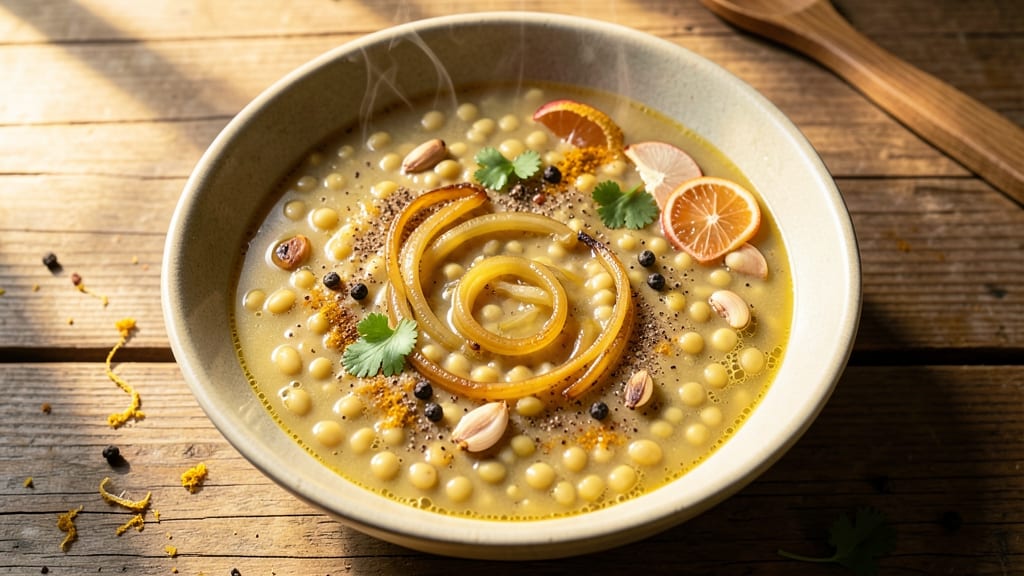
This Ayurvedic mung bean soup brings ancient healing wisdom into your kitchen with every comforting spoonful. 💛 The foundation of Ayurvedic cooking, mung beans are light yet nourishing—perfect for balancing all three doshas while supporting digestion.
Warm spices like cumin, ginger, and turmeric work together to create a soup that's both soothing and energizing, making it ideal for cooler months or after physical exertion.
The beauty of this recipe lies in its simplicity and adaptability. With just a handful of whole-food ingredients, you'll create a broth that's rich in plant-based protein and easy to digest. The key technique is gentle simmering, which allows the beans to soften while preserving their natural nutrients.
Unlike many modern soups that rely on processed ingredients, this version stays true to Ayurvedic principles—using whole spices and minimal oil to maintain balance.
What you'll end up with is a vibrant, golden soup that's warm, aromatic, and deeply satisfying. The spices infuse the broth with earthy, slightly sweet notes, while the mung beans provide a satisfying texture that's neither mushy nor crunchy.
This isn't just another vegetable soup—it's a nourishing elixir designed to support your body's natural rhythms. The best part? It's completely plant-based, making it suitable for vegans while still delivering the gut-healing benefits Ayurveda promises.
Perfect for meal prep or serving immediately, this soup tastes even better the next day as the flavors meld. Garnish with fresh cilantro and a squeeze of lemon for brightness, or serve with whole-grain bread to complete the meal.
Let's create this healing bowl of warmth that nourishes both body and mind.
Ingredients for ayurvedic mung bean soup
Whole-food ingredients that harmonize flavor and healing in every spoonful—this is Ayurveda's golden bowl of comfort.
| Ingredient | Amount | Notes |
|---|---|---|
| Yellow Split Mung Beans 🌾 | 1 ½ cups | Rinsed thoroughly before cooking |
| Yellow Onion 🧅 | 1 whole | Chopped into small dice |
| Fresh Ginger 🌿 | ½ inch | Thinly sliced, peeled |
| Garlic Cloves 🧄 | 4 cloves | Minced finely for depth |
| Ground Cumin 🌶️ | 1 tsp | Freshly toasted for aroma |
| Ground Turmeric 🌿 | ½ tsp | Bright orange for color |
| Ground Coriander 🌶️ | ½ tsp | Warm, citrusy undertone |
| Fresh Cilantro 🌿 | ¼ cup | Chopped for garnish |
| Fresh Lemon Juice 🍋 | 2 tbsp | Brightens the broth |
| Extra-Virgin Olive Oil 🫒 | 2 tbsp | Cold-pressed for flavor |
| Vegetable Broth 💧 | 4 cups | Low-sodium preferred |
| Fresh Coconut Milk 🥥 | ½ cup | Full-fat for creaminess |
| Sea Salt 🧂 | ½ tsp | Adjust to taste |
| Black Peppercorns 🌶️ | ¼ tsp | Freshly cracked |
The mung beans are the heart of this soup—split and yellow for perfect texture and digestibility. Whole Foods or Indian grocery stores carry them in bulk, which is ideal since they keep for months in a cool, dark place. Fresh ginger and garlic are non-negotiable; organic produce from the farmers market has the most zing. Toast your whole spices (cumin, coriander) for 30 seconds in a dry pan before grinding—they'll sing with aroma. The coconut milk adds richness without overpowering; full-fat canned or cartons work best, but avoid ultra-filtered versions that lack body.
No fresh ginger? Powdered works at half the amount, but you'll lose that bright, peppery kick. Substitute vegetable broth with water plus 1 tsp bouillon powder if needed—just remember to reduce the salt. Coconut milk too pricey? Cashew cream (blended soaked cashews + water) gives similar creaminess. The cilantro is purely for garnish, but if you're out, fresh parsley works too. For extra depth, add 1 tsp asafoetida (hing), an Ayurvedic spice that enhances digestion—find it in Indian markets or online specialty stores.
This soup tastes even better the next day as flavors meld—portion into containers for meal prep. Store in the fridge for 4-5 days or freeze for 3 months (use within 3 months for best texture). Reheat gently on low, adding a splash of water if it thickens too much. The broth reduces slightly when reheated, so make it a bit more than you think you'll need. Garnish with extra cilantro and a squeeze of lemon right before serving—trust me on this—it makes all the difference.
Why You'll Love This Recipe
- No-Chop Nightmare: I swear by this recipe on days when I’m too tired to dice onions properly. Toss in whole cloves of garlic and a big chunk of ginger—peel and slice, that’s it. The beans soften everything into golden, aromatic bliss without requiring a knife marathon.
- Earthy Warmth: That cumin-toasted onion base? It’s where the magic happens. Deep, toasty, and just slightly sweet—like a hug in a bowl. The split mung beans add this gentle, almost creamy texture that balances the punch, making it feel like a restaurant dish without the fuss.
- Lunchbox Legend: Between us, this soup is my go-to for meal prep. It reheats like a dream, stays fresh for days, and I’ve packed it in thermoses for hikes, office lunches, and even my kid’s school lunches (yes, even on a Tuesday). Add a squeeze of lemon before serving, and suddenly you’ve got a gourmet touch.
- Pantry Powerhouse: I keep a bag of yellow mung beans on hand just for this. They’re cheaper than rice, cook faster than lentils, and never let me down. Honestly, the only thing I splurge on is fresh ginger—because that’s what turns this from good to ridiculously good.
Step-by-step instructions for Ayurvedic mung bean soup
Here's how to create this nourishing, spice-infused soup that warms your body and soothes your digestion.
🍳 Step 1: Sauté Aromatics Until Fragrant
Heat the 2 tablespoons extra-virgin olive oil in a medium pot over medium heat. Add the 1 whole yellow onion and cook for 4-5 minutes until softened and just beginning to color. This step builds flavor foundation—don't rush it.
Add the 0.5-inch fresh ginger and 4 garlic cloves, stirring constantly for 1-2 minutes until the ginger becomes translucent and the garlic releases its pungent aroma. Here's the thing—ginger and garlic should smell vibrant, not burnt. If they darken too quickly, reduce the heat slightly. These aromatics are the soul of this Ayurvedic preparation.
🔥 Step 2: Toast Spices for Maximum Flavor
Immediately add the 1 teaspoon ground cumin, 0.5 teaspoon ground turmeric, and 0.5 teaspoon ground coriander. Stir for 30 seconds until the spices become fragrant and the cumin starts to darken slightly—this releases their essential oils. I always toast spices first because it deepens their flavor profile dramatically.
Watch carefully—spices burn quickly. You'll see a subtle aroma change when they're properly toasted. Add the 4 cups vegetable broth and bring to a gentle boil. This step creates the spiced base that will infuse the entire soup with warmth.
👨🍳 Step 3: Cook the Mung Beans Until Tender
Add the 1.5 cups yellow split mung beans (previously rinsed) to the simmering broth. Reduce heat to medium-low and cook for 20-25 minutes, stirring occasionally, until the beans are tender but not mushy. You'll know they're ready when they easily crush between your fingers but still hold their shape.
I like to check doneness at the 15-minute mark—if they're still firm, cover and let them cook undisturbed. Overcooking turns them to mush, which defeats the purpose of this gut-healing soup. The beans should be soft enough to digest easily but still retain their natural texture.
🥘 Step 4: Finish with Creamy Coconut and Bright Citrus
Stir in the 0.5 cup fresh coconut milk and 0.5 teaspoon sea salt. Simmer for 3-4 minutes until the soup reaches your desired consistency. The coconut milk adds richness while keeping the dish light—this balance is key for Ayurvedic digestion.
Remove from heat and stir in the 2 tablespoons fresh lemon juice and 0.25 teaspoon black peppercorns. The lemon brightens the earthy flavors while the pepper adds a warming kick. Let it sit for 2 minutes to allow the lemon to infuse fully—this makes all the difference in the final taste.
🍽️ Step 5: Garnish and Serve Warm
Divide the soup among bowls and garnish with the 0.25 cup fresh cilantro. The cilantro adds freshness and visual appeal, plus it's packed with digestive enzymes. Serve immediately while steaming hot—this Ayurvedic soup is best enjoyed fresh to maximize its warming properties.
Each spoonful delivers a perfect balance of earthy mung beans, aromatic spices, and bright citrus. The coconut milk creates a velvety texture that makes this soup incredibly satisfying while supporting digestive health. Pair it with whole-grain bread or a simple salad for a complete meal.
Pro Tips For Making Ayurvedic Mung Bean Soup
- SOAK BEANS OVERNIGHT: I learned this the hard way—rushing the soak means gummy beans that refuse to break down. Split mung beans need at least 8 hours in water (or a quick 2-hour soak with 1 tsp baking soda), but overnight is foolproof. Drain and rinse right before cooking to avoid a watery soup—trust me, your future self will notice the difference.
- TOAST CUMIN LOW: That earthy aroma? It comes from toasting the cumin until it smells just right—not burnt, not raw, but somewhere in between. Keep the heat at medium-low and stir constantly for 30 seconds max. Over-toasting turns it bitter; under-toasting leaves it flavorless. Your nose is your best tool here.
- SWEAT ONIONS SLOWLY: Skip the high heat—this isn’t an onion stir-fry. Cook the yellow onion over medium-low until it’s translucent and just starting to caramelize (about 8-10 minutes). Rushed onions release too much water, diluting the soup’s depth. Patience here makes the whole dish taste richer.
- BLANCH GINGER-GARLIC: Sounds weird, but it works: After mincing the ginger and garlic, toss them in a dry pan for 30 seconds until fragrant but not browned. This kills raw flavors and deepens their aroma before they hit the pot. No need to add oil—just a quick sear does the trick.
Flavor customization for this dish
Spice Level Control
Adjust the heat to suit your dosha: For Vata types (dry, airy constitution), add ½ tsp asafoetida (hing) and ¼ tsp black pepper for grounding warmth. Pitta types (hot, fiery) should reduce black pepper to ¼ tsp and omit cayenne.
For Kapha types (heavy, sluggish), boost metabolism with ½ tsp cayenne and ¼ tsp ginger powder—this creates a light, invigorating broth that counters congestion. 🌶️
Sweet-Savory Balance
Add a touch of sweetness to complement the savory spices: Stir in 1 tsp jaggery (unrefined cane sugar) or 1 tsp maple syrup during the final simmer for a subtle caramel note.
For extra depth, blend ½ cup roasted cauliflower into the soup—its nutty sweetness pairs beautifully with the earthy mung beans. This adjustment is especially helpful for Pitta types who need cooling sweetness to balance heat.
Vegetable Variations
Incorporate seasonal vegetables to enhance nutrition: Sauté ½ cup grated zucchini or ½ cup diced sweet potato with the onions for natural sweetness. For a Kapha-balancing version, add ½ cup shredded cabbage and ¼ cup chopped kale—these cruciferous veggies support lymphatic drainage.
Always cook vegetables until tender to maintain easy digestion, a core Ayurvedic principle.
Herbal Infusions
Boost healing properties with Ayurvedic herbs: Add 1 tsp fresh basil or 1 tsp dried fenugreek leaves while simmering for digestive support. For Vata types, infuse with ½ tsp fennel seeds (toasted) to soothe nervous tension.
These additions require no extra effort—just steep with the spices during the initial sautéing. The herbs will dissolve into the broth, creating a subtly aromatic layer. ✨
Texture Adjustments
Create different mouthfeels to suit preferences: For a creamy version, blend ½ cup of the cooked soup until smooth, then stir back in. For a chunkier texture, reserve ¼ cup cooked mung beans and serve them whole on top.
This technique allows you to control digestion speed—blended soups are easier to digest for Kapha types, while textured versions satisfy Pitta cravings for heartier meals.
Protein Boost
Increase plant-based protein without altering the Ayurvedic balance: Stir in ½ cup cooked lentils (red or moong) or ¼ cup nutritional yeast for a cheesy flavor without dairy. For Vata types needing extra grounding, add 2 tbsp pumpkin seeds—their crunch adds texture while providing magnesium.
These additions work best when mixed in during the final 3-4 minutes of cooking to preserve their nutrients. 💪
Nutrition facts
Frequently asked questions
Can I use whole mung beans instead of split?
Yes, but cooking time will increase significantly. Whole mung beans require 45-60 minutes of simmering until tender, while split beans cook in 20-25 minutes. For best results, soak whole beans overnight to reduce cooking time by about 15 minutes. The texture will be slightly different—whole beans stay firmer, while split ones become creamier.
How do I adjust this for a Vata-dosha constitution?
For Vata types, focus on grounding warmth and stability. Add ½ tsp asafoetida (hing) and ¼ tsp black pepper during cooking, and include ½ cup cooked sweet potatoes for natural sweetness. Serve with warm whole-grain bread and a side of sautéed spinach to enhance grounding energy. The coconut milk already provides Kapha-balancing moisture, so no adjustments are needed there.
Can I make this soup without coconut milk?
For a lighter version, replace coconut milk with ½ cup blended cashews (soaked for 1 hour) or ¼ cup tahini thinned with broth. For extra richness without dairy, use ½ cup Greek-style tofu (blended smooth). The soup will still be creamy but with a different flavor profile—cashews add nutty depth while tahini brings earthy notes. Adjust salt accordingly.
Why does my soup taste bitter?
Bitterness usually comes from overcooked spices or beans. Check your cumin—if toasted too long, it turns bitter. For future batches, toast spices for exactly 30 seconds and remove from heat immediately. Also, overcooked mung beans release bitter compounds. Cook beans until just tender (20-25 minutes) and stir in lemon juice at the end to brighten flavors. If already bitter, add ½ tsp jaggery or 1 tsp maple syrup to balance.
How can I make this soup more protein-rich?
Add these protein boosters without altering the Ayurvedic balance: Stir in ½ cup cooked lentils (red or moong dal) or ¼ cup nutritional yeast during the final 5 minutes of cooking. For extra crunch, top with 2 tbsp pumpkin seeds or 1 tbsp hemp seeds. These additions increase protein by 10-15g per serving while maintaining the soup's easy digestibility—key for Ayurvedic principles.